




Description
The Swan River daisy comes from Australia, where it grows on rocks. It is not yet very well known in Europe and has only recently been given a Polish name. Until now it has been sold as seed of a summer plant for cut flowers.
The Swan River daisy is vigorous and easy to care for. Under normal conditions it starts flowering in June. Young plants are small, but they can quickly outgrow other container plants.
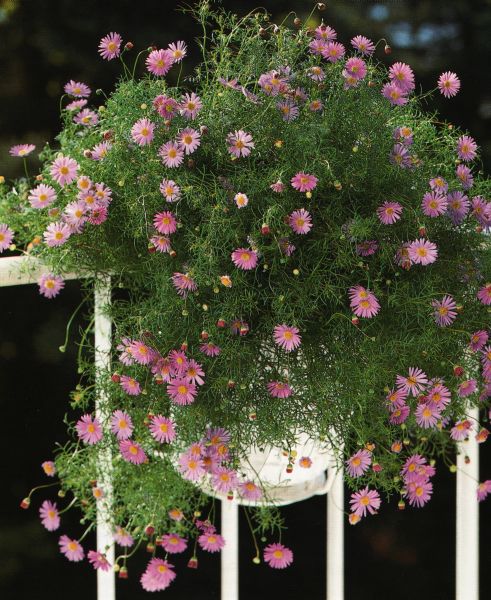
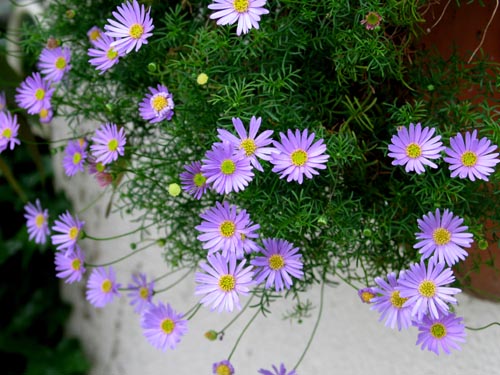
Brachyscome flowers resemble the familiar daisies in shape, but their colours are different and very varied. They are borne on long stalks among delicate, feathery leaves.
Requirements
The plant needs a sunny position outdoors. It does not overwinter and dies in late autumn.
Throughout the summer it needs adequate watering and weekly feeding.
These plants like fertile, humus-rich, free-draining soil.
Swan River daisies do best and look their best in hanging pots or balcony boxes.
Propagation
Brachyscome seeds can be bought in a garden centre.
If you want plants that flower early, sow the seeds indoors as early as March. Fill a tray with potting compost. The seeds are very small, so it is a good idea to mix them with a handful of sand to avoid sowing too thickly. After sowing, moisten the soil a little with a sprayer and cover the tray with a sheet of glass to keep the air humid. Place the tray somewhere bright and warm, for example a window above a radiator.
Pricking out the seedlings – when the seedlings are big enough for the first true leaves to appear between the seed leaves, it is time to prick them out. This means spacing the small plants far enough apart for each to have room to develop – about 20 cm. If there are very many seedlings, you can skip pricking out and simply remove the weak ones. Be careful not to damage the delicate roots: lift the seedlings gently and plant them in pots.
Outdoors in May – once there is no longer any risk of frost, Brachyscome can be moved outdoors to its intended spot, usually in mid-May. They look loveliest in balcony boxes, where their long shoots can trail down. They also combine easily with other flowers.
Sowing in place – if you have no room to raise the plants indoors earlier, wait until the end of May and sow the seeds straight into the balcony boxes. They will flower a little later.
Care
Remember that in rainy periods the plants often rot. They can also be grown in rock gardens, borders and flower beds.
Transplanting is necessary if you raised the plants yourself and are planting them out in mid-May.
When plants get sick
Faded flowers that curl up are not a sign of disease. Simply pick them off, and a new flower will soon appear in their place.
Aphids – can appear on balcony plants at any time. The best remedy is to wash them off with a jet of water. If the attack is severe, there is nothing for it but to spray the affected plants with an insecticide.
Yellowed leaves – a sign of either unsuitable soil or lack of water. In summer the plant needs plenty of water. It is also worth changing the soil in the boxes.
Before you buy
Average lifespan: – unfortunately short-lived
Difficulty of care: – easy to look after