Description
European wild ginger is a perennial of the birthwort family (Aristolochiaceae). It occurs in central and southern Europe, as well as in Siberia and Asia Minor. It is a native species, common almost throughout Poland in shady deciduous and mixed forests and thickets. In the mountains it reaches the upper montane zone. In Poland it is partially protected.
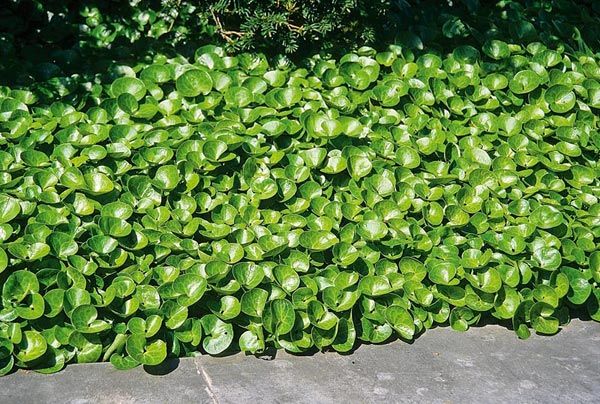
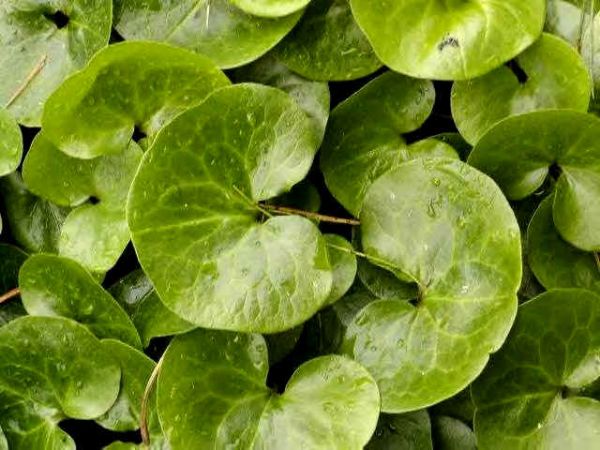
Wild ginger is a very low plant, 10–15 cm tall, forming dense clumps. It has strongly branching rhizomes creeping just below the surface. The dark green, leathery, glossy leaves have a characteristic kidney shape resembling a horse's hoofprint. They are evergreen, and their long stalks and undersides are hairy.
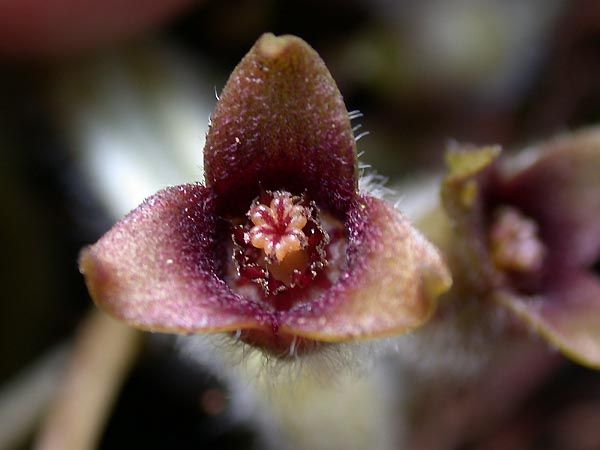
The flowers are inconspicuous, solitary, purplish-brown and bell-shaped, growing right at ground level and usually hidden under the leaves. It flowers from March to May.
The whole plant gives off a distinctive peppery, aromatic scent; when it flowers it attracts carrion flies, which pollinate it.
Wild ginger is grown as an ornamental plant in gardens and parks. It is excellent as ground cover, especially in shady places such as under trees. It is best planted in groups. It is also suitable for rock gardens.
It is also a medicinal plant – the rhizome is used. It acts as an emetic, diuretic, expectorant and laxative and has been used for disorders of the upper respiratory tract, bladder and kidneys. In larger amounts it is poisonous.
Requirements
Wild ginger grows best in fertile, humus-rich, moist soils, preferably alkaline.
Propagation
It is propagated by dividing the rhizomes in March–April.