Description
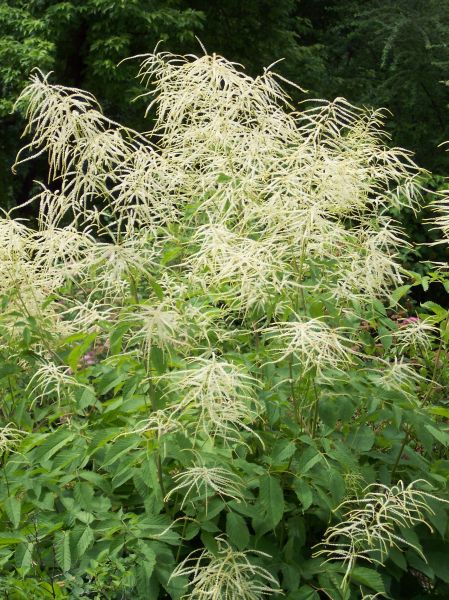
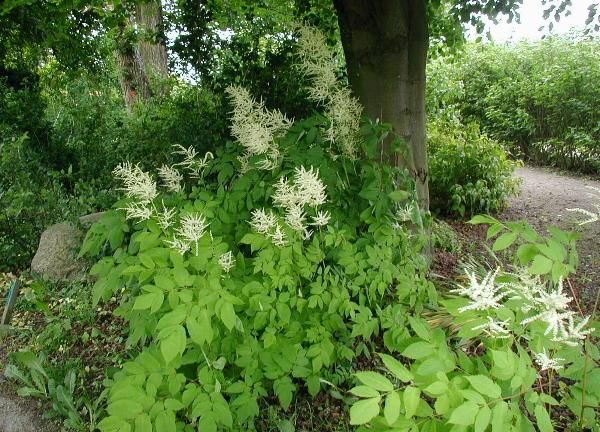
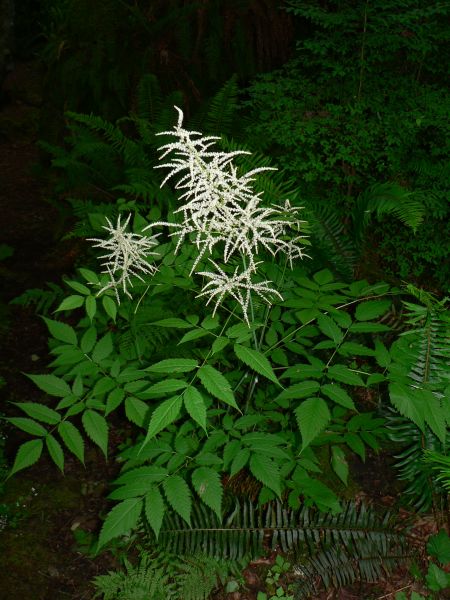
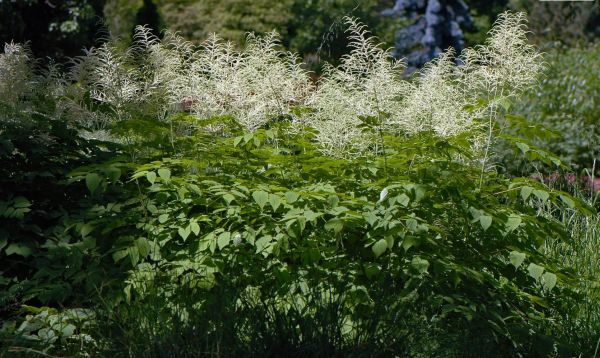
Goat's beard grows wild in France, Germany and Poland. It is a tall plant reaching 1.5 to 2 metres. It forms clumps about a metre across that spread quickly. Its flowers are white, tiny and grow in panicles; each is only a few millimetres across. They are male or female – the female ones are slightly yellowish. The leaves are large, lance-shaped and toothed at the edges. After flowering they continue to decorate the plant and are quite ornamental. The plant spreads and roots well. It flowers in May and June.
It is suitable for lawns as a specimen plant. It looks beautiful at the back of perennial borders. It is sometimes planted under trees, where it adds beauty and decoration. It can be used as a cut flower and lasts quite a long time in a vase. It is added to bouquets and arrangements.
Requirements
It grows best in humus-rich, moisture-retentive, acidic soil. A lightly shaded position is most suitable. It does not like sun or dry, sandy places.
Propagation
From seed that has been through frost. Brought into a greenhouse at 10–15°C in spring, it germinates after 15 days. The seedlings are so tiny that they are pricked out in clumps. They are ready to be planted in their final position only after two years. It self-seeds easily. It can also be propagated from tip cuttings in late spring and by division after flowering – or by dividing the clump in September, after cutting back the stems. The divisions can be planted straight into the ground and will root before winter. Division is very difficult because of the strongly woody roots, and it is not a very productive method.
Care
After planting it needs about 2 years to become fully established. Water it during dry spells.
It is planted in places where natural conditions do not allow other plants to grow. Cut off the flowers once they have faded. The perennial is frost-hardy, so it does not need covering in winter.
Goat's beard is a poisonous plant. If swallowed, contact a doctor immediately.