Description
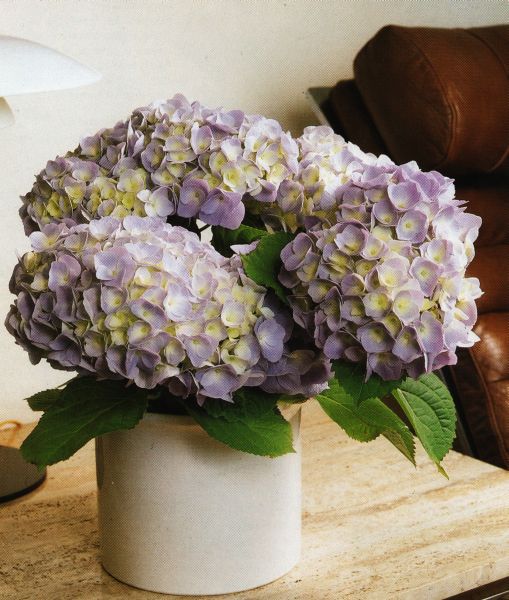
For many years hydrangeas were considered old-fashioned flowers suitable only for certain occasions. Today garden hydrangeas are enjoying a revival and are increasingly seen in gardens, on windowsills and in vases.
Bigleaf hydrangeas come from China and Japan, where they grow lushly along riverbanks. In Europe they have already celebrated their two-hundredth anniversary – the first hydrangeas were brought from Japan to England in 1799.
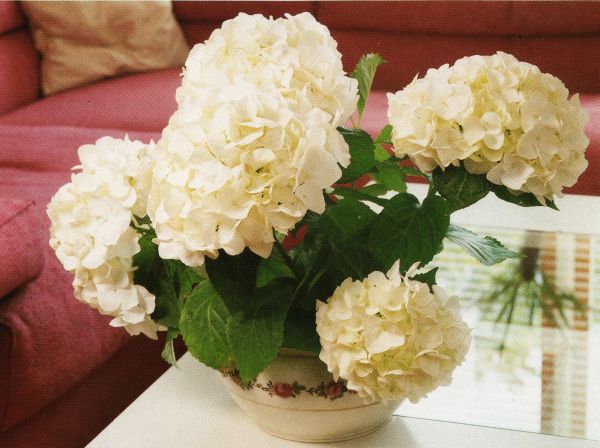
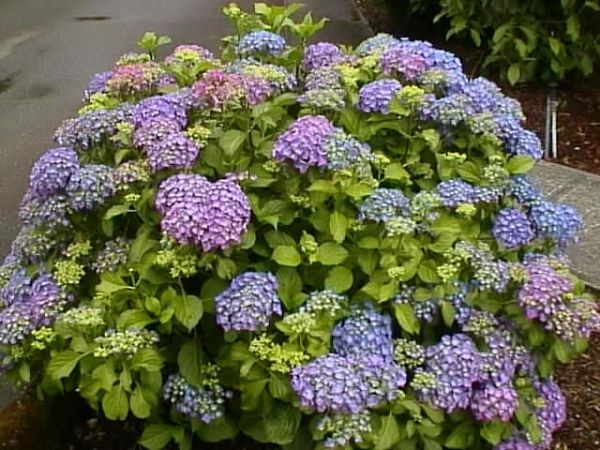
Besides the well-known indoor hydrangea varieties, there are other, frost-hardy, bushy garden hydrangeas with white flowers. There are also hydrangeas with velvety flowers, with soft leaves, or with flower heads shaped more like lilac. Some kinds of hydrangea can climb house walls, reaching up to 8 metres. They are planted in acidic soil, often together with rhododendrons.
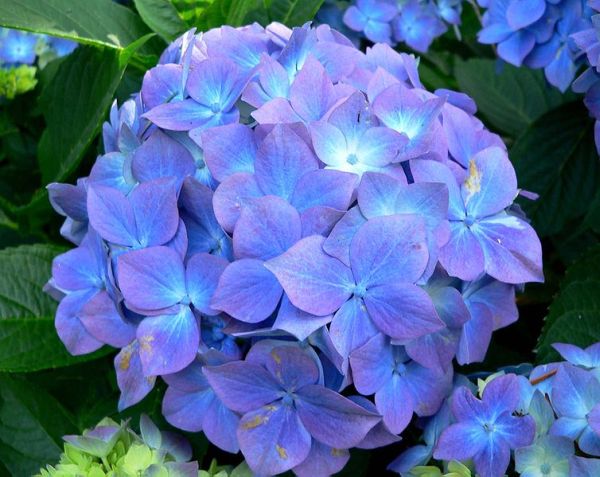
Hydrangea flower balls often consist of "false" flowers made up only of coloured sepals, whose job is to attract insects. The true flowers, much smaller, are in the centre of the cluster. The flowers last for several weeks.
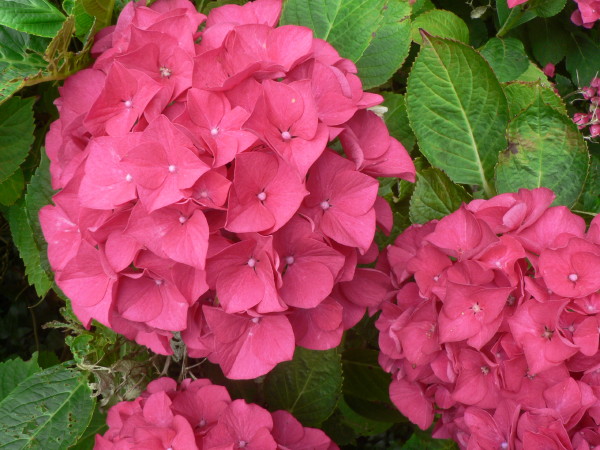
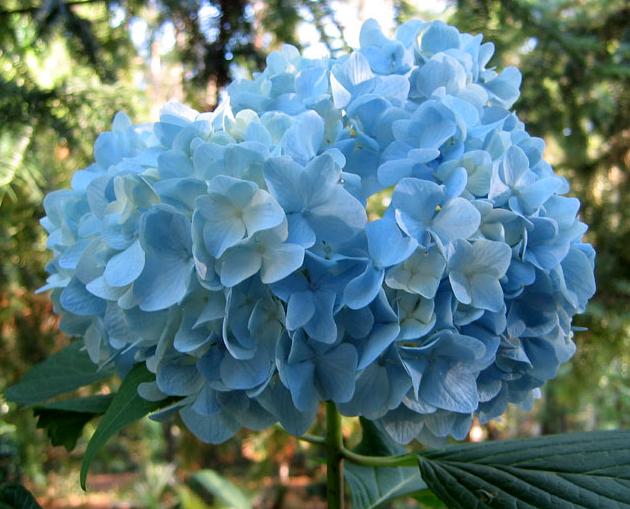
Bigleaf hydrangeas are chameleons. In acidic conditions the flowers of pink varieties take on an unusual blue tint. Only white hydrangeas do not change in this way. How to manipulate the colour is described in the propagation section.
Hydrangea grows well in balcony boxes and flowers from June to the end of September. Note, however, that pot varieties are not frost-hardy, so bring them indoors before the first frosts.
Requirements
Hydrangeas like bright but cool places. During flowering they need generous watering, but only with soft water. The best temperature is 20°C in summer and 7°C in winter.
Propagation
The plants are propagated from January to June from tip cuttings. Cut stems root even in a glass of water. Plants propagated this way early in the year must be kept warm. For bushy plants, pinch out the tips above two well-developed leaves.
Blue flowers of your own – simply buy aluminium sulphate (or ammonium alum) at a pharmacy or garden centre. When repotting, mix 10 g per 1 kg of soil into the compost, then water twice a week with a 2% solution. Unfortunately not all hydrangeas react to acidic soil as we would like.
Care
Place the plants in a bright but cool spot, ideally an east- or west-facing window. On a terrace they need a sheltered, shaded spot.
During flowering water generously, but only with soft water. In high temperatures it is best to mist them. From September to February water less, but do not let them dry out. From the appearance of the first flower until mid-August, feed every week with a lime-free fertiliser.
When all the flowers have faded, usually in September, repot the hydrangea into light peat mixed with sand or into a special compost prepared by a nursery.
To make the plant flower year after year, pruning is necessary. Cut faded shoots back by half and remove weak ones completely. Stop pruning in June, as buds for the next flowers then form at the shoot tips.
The plants can stay outside all summer. When the first frosts come, however, they must be brought indoors to a cool room.
When plants get sick
Spider mites – recognised by fine webbing on the undersides of the leaves. If noticed in time, the affected leaves can be removed. If that does not help, the diseased plants must be discarded.
Aphids – usually settle on young, soft shoots. You can try washing them off with water. If that does not help, use a suitable insecticide.
Too little water – makes the leaves wilt, turn brown and curl. During flowering water well – in hot weather even twice a day. Drying plants can be stood in a container of water until the soil is moist enough.
Powdery mildew – shows as a white coating on the leaves. Remove and destroy the affected leaves and use a fungicide.
Before you buy
Average lifespan: – if you look after them well over winter, you will enjoy them again the following year.
Difficulty of care: – it does not need special treatment, but it must be watered generously in summer.