Description
The pasque flower is a perennial that grows wild in western and central Europe. In Poland it is strictly protected, although it has sadly disappeared from its natural sites. Gardens mostly grow garden hybrids.
Because it flowers so early, it is one of the most sought-after and attractive spring flowers planted in home gardens. It remains ornamental after flowering, too. It is suitable for borders and rock gardens and for planting in clumps by houses or fences. Garden pasque flowers can be planted in borders and large rock gardens.
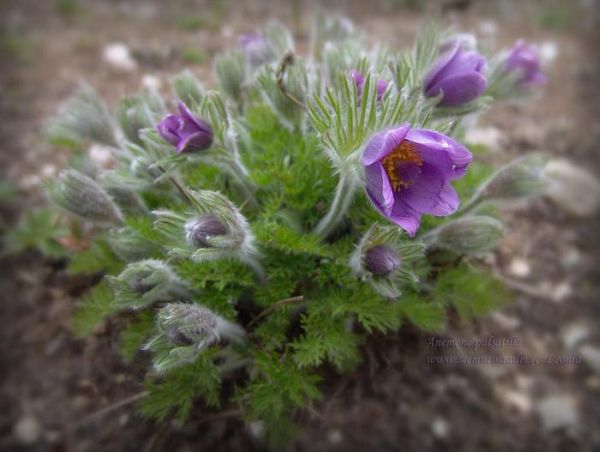
The pasque flower forms clumps up to 20–30 cm tall. The young plant is densely covered in felty hairs, later becoming increasingly bare. The pinnate leaves, gathered in a basal rosette, look a little like carrot leaves. When the plant is in flower the leaves are small, so the flowers are nicely displayed; they develop fully only in summer. Underground the plant has a strong, branched rhizome from which several stems covered with long silvery hairs grow, each ending in a single flower.
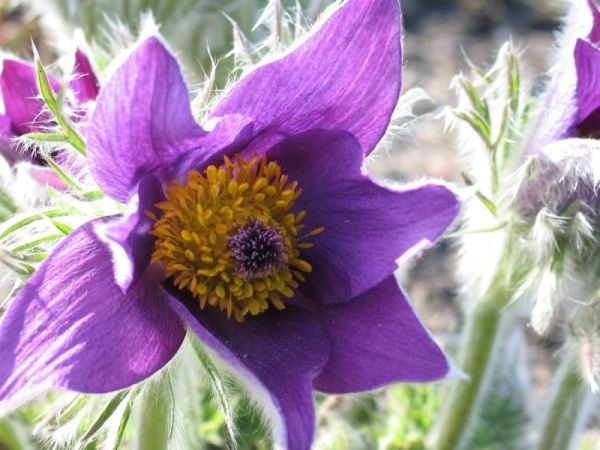
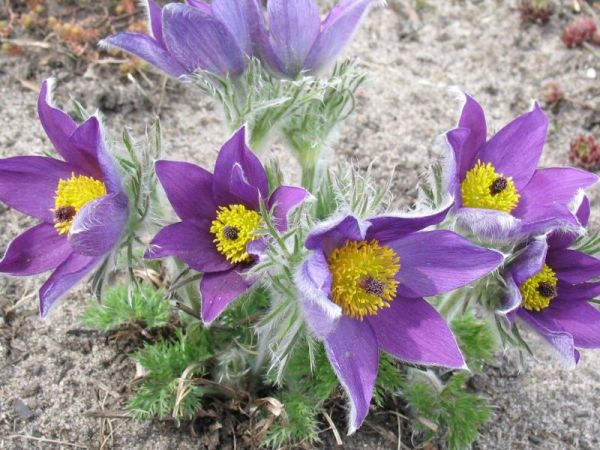
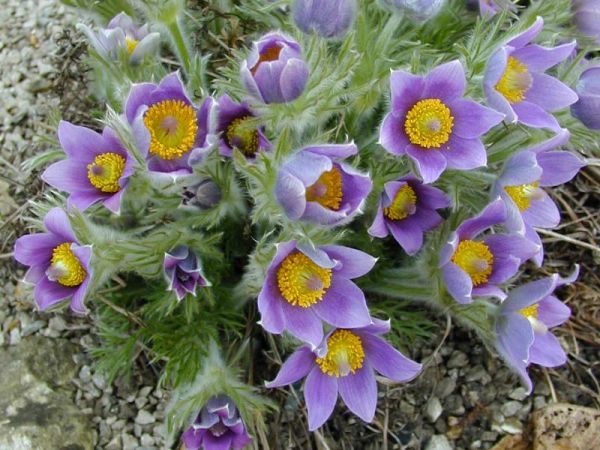
Pasque flowers bloom from March to early May. The flowers appear gradually – one plant can produce dozens of them. They are 5–6 cm across, characteristically felty on the outside, facing upwards, bell-shaped at first and later opening out. Some plants flower again in August, but then only single flowers appear. Most species and garden hybrids have violet flowers. Purple and white varieties are also widespread. Plants with milky-white flowers are harder to grow and usually die earlier. After flowering the plant remains very decorative, as the fluffy seed heads stay on it.
Requirements
The pasque flower needs a lot of light. It likes fertile, light, sandy, rather dry and poor but well-drained, free-draining soil with a neutral or alkaline pH, well limed. It grows best in sunny or lightly shaded places. Mature plants tolerate drought very well thanks to their deep, well-developed root system.
Propagation
Pasque flowers are best propagated from seed, collected when it separates easily from the seed head. Sow in the second half of July so that the delicate seedlings are not damaged by the heat. The seeds germinate after 4–6 weeks. In spring of the following year prick out the seedlings and plant them in their final position. Most plants will flower the next spring. At the first flowering they produce at most five flowers, but as they grow they will have dozens. Pasque flowers grown from seed usually do not repeat the traits of the mother plants: if you collect seed from white-flowered plants, only some of the seedlings will have white flowers – the rest will be violet.
Pasque flowers can also be propagated by dividing the rhizomes. After a few years the root ball becomes too dense; it should then be dug up and thinned. A pasque flower dies at the latest five years after being planted in its final position in the garden. The more refined the flower (colour, shape), the shorter the plant lives – sometimes only three years – so a collection of these plants needs constant renewal.