Description
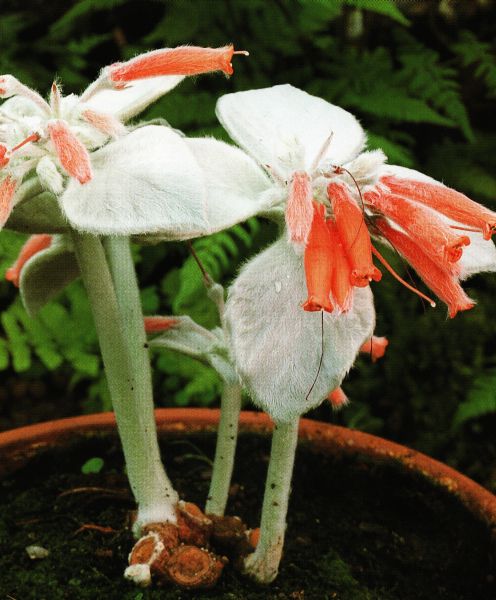
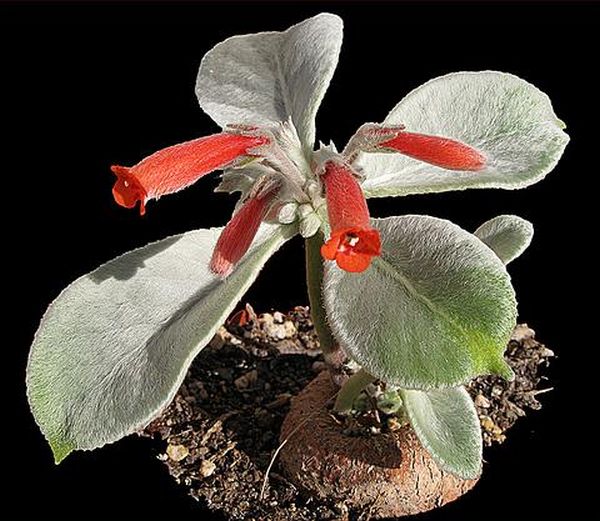
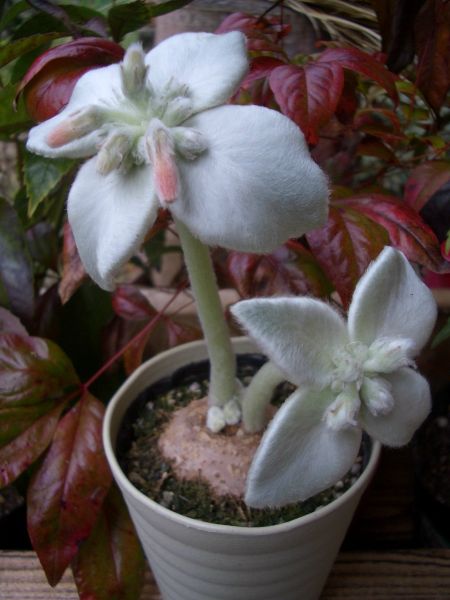
Rechsteineria comes from Brazil; its flowers are the same colour as the vestments of cardinals there. There is also a white-flowered species, but it is rare.
The plant forms tubers in which it stores water and nutrients. In winter the tubers hold everything the plant needs to start growing again in spring. New shoots appear when the days become warmer and longer.
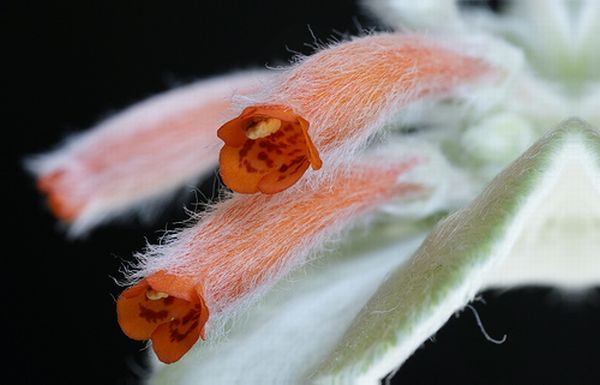
There are 75 different species of rechsteineria. Few are available in florists, and only some can be raised at home. Stems 30 cm long bear 3–4 leaves. The flower buds are grey and the flowers bright red.
Requirements
Rechsteineria loves brightly lit positions, but does not tolerate harsh sun. It needs soft water. Air humidity should be high, but the hairy leaves must not be sprayed. The pot must never stand in water.
Propagation
There are several ways to propagate rechsteineria. Seeds can be sown in spring. If the plant forms a small tuber in its first year, it should be given a rest in winter. Seedlings that have not formed tubers can keep growing in a warm place over winter.
Rechsteineria can also be propagated from cuttings, cut with a small piece of tuber. Plant the cutting in compost, support it with a stick and cover it with a plastic bag.
Care
In February take the tubers out of the old compost and clean them. Then lay them on moist peat and press them lightly into it. When the shoots are 5 cm tall, move the plants to ordinary flower compost. Increase watering, and in summer feed every 14 days. From August stop feeding and reduce watering. From October the plants should be kept at 15°C. During the rest of the year the plant grows best at 20–25°C.
When plants get sick
Rechsteineria is fairly resistant if it has sufficiently high air humidity.
Spider mites deform the leaves.
Before you buy
Seeds can be obtained at the end of winter, and flowering plants in early spring. It is a sought-after plant, but hard to find on the market.
Average lifespan: – Grown at home, it can live for a very long time.
Difficulty of care: – Not particularly difficult to grow.