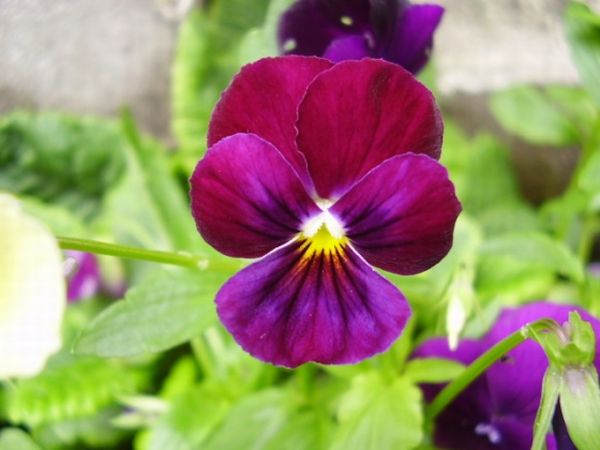
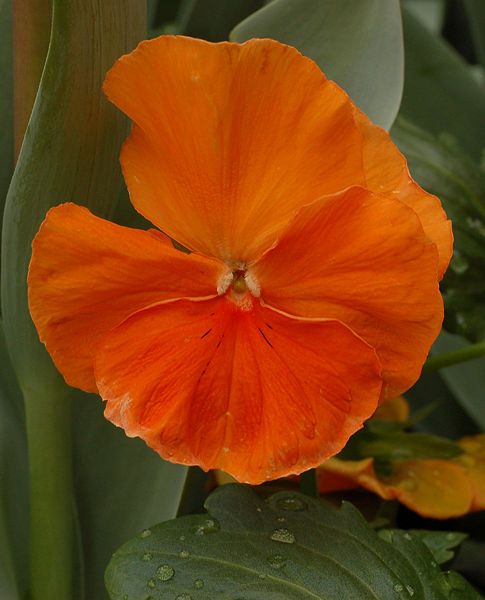
Description
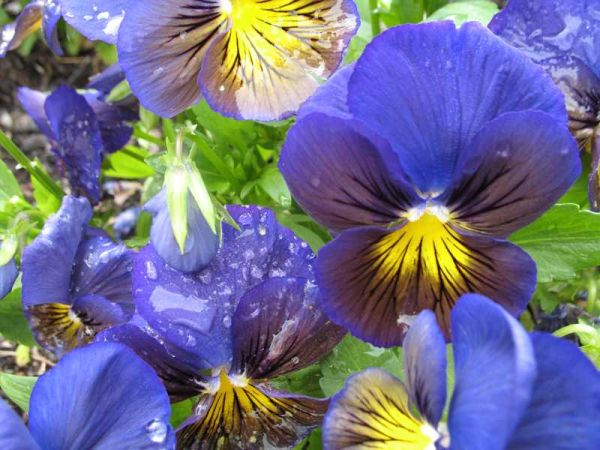
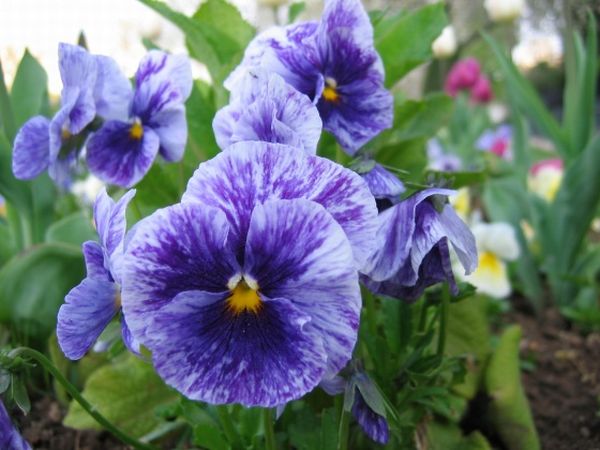
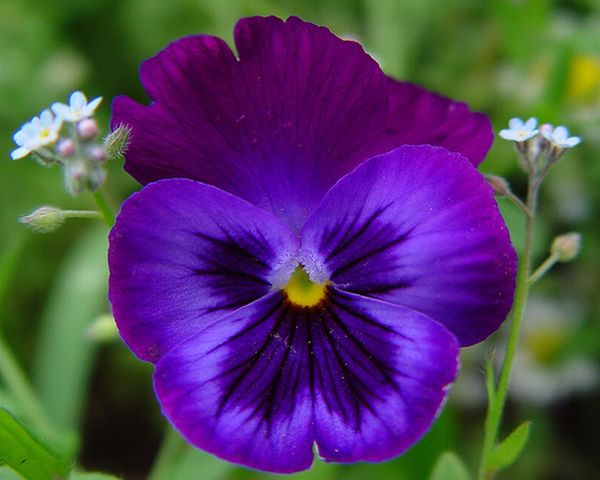
The garden pansy, a biennial of the violet family, was bred by crossing the wild pansy (Viola tricolor) with other species. Viola × wittrockiana grows 15–30 cm tall, with smooth, juicy, square stems bearing leaves that are larger and egg-heart-shaped at the base and lance-shaped higher up. Depending on the group and variety, the flowers vary in diameter; they are bilaterally symmetrical with a five-petalled corolla in many colours and shades, with contrasting markings. The flowers sit singly on stalks growing from the leaf axils.
Many groups and varieties of pansies are cultivated. Early-flowering pansies include the following groups:
Hiemalis – varieties with small flowers that flower profusely and withstand low temperatures; the Pirna pansies, with flowers with an "eye", flower fairly early but a few days later than the previous group.
Vorbote – very large, round flowers in clear, intense colours.
Dutch multiflora – large flowers in intense colours.
Mid-season and late pansies include the groups:
Roggli – very large flowers in many intense colours; many varieties have a differently coloured eye on the lower petal.
Swiss Giants – large flowers, vigorous, free-flowering plants; a large-flowered mix.
Engelmann – pansies of English breeding with very large flowers in various colours except white.
Giant Orchideiflora – very large flowers in pastel colours; frilled petal edges, the lower petal bent downwards.
Trimardeau – large flowers (smaller than the previous groups), with an eye on the lower petals.
The plants flower profusely. There are also many mixtures and varieties that do not belong to the groups above.
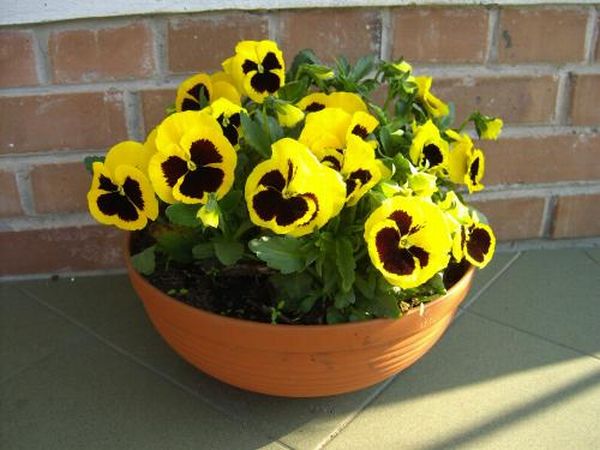
Pansies are used in flower beds, edging, bowls and balcony boxes. Some varieties are grown as pot plants, so they can be used to decorate our homes in spring. They are also suitable as cut flowers. Varieties with trailing stems are now also available and look very attractive in hanging containers.
Requirements
Pansies like fertile, humus-rich soil with a neutral or slightly acidic pH. They need a sunny or lightly shaded position. In too much shade they become less attractive, flowering less and growing leggy.
Propagation
Grow them from seed sown from the second half of June to the beginning of July in a cold frame or seedbed. Prick out young seedlings 4 x 5 cm apart, and in the first half of September plant them out in nursery beds. For winter they can be covered, e.g. with spruce branches, to overwinter well. At the end of April plant them in their final position 25 x 20 cm apart.