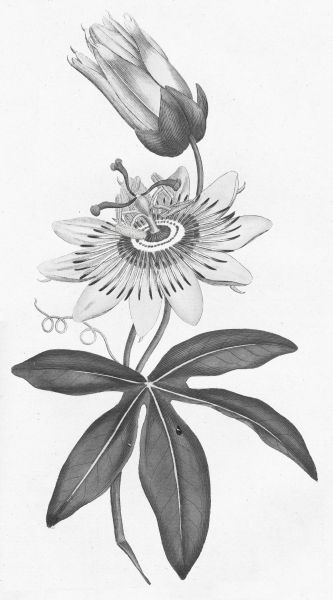
Description
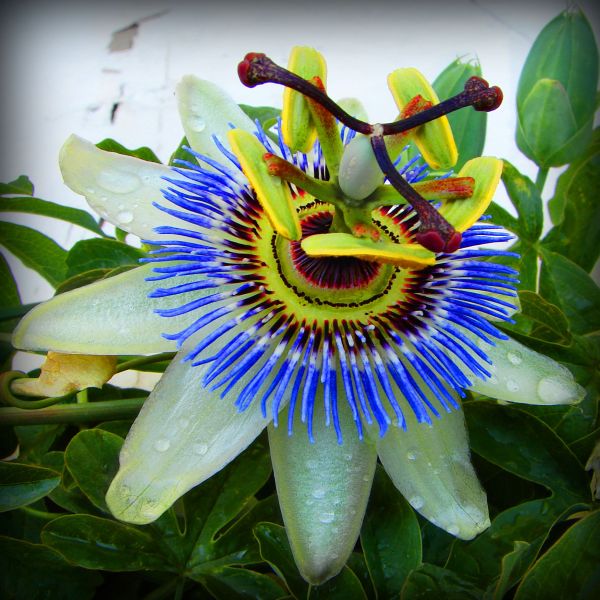
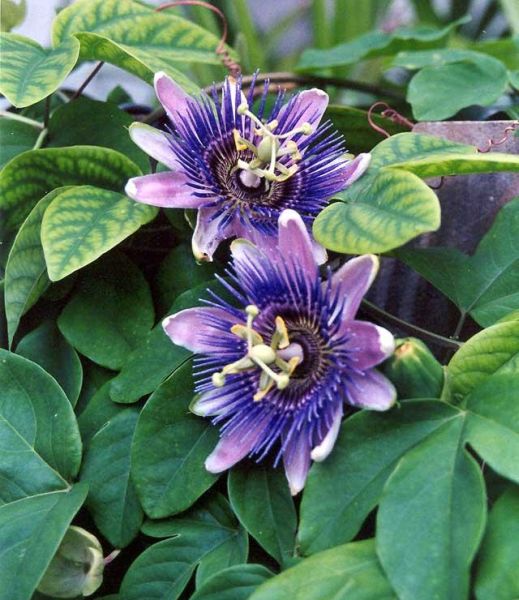
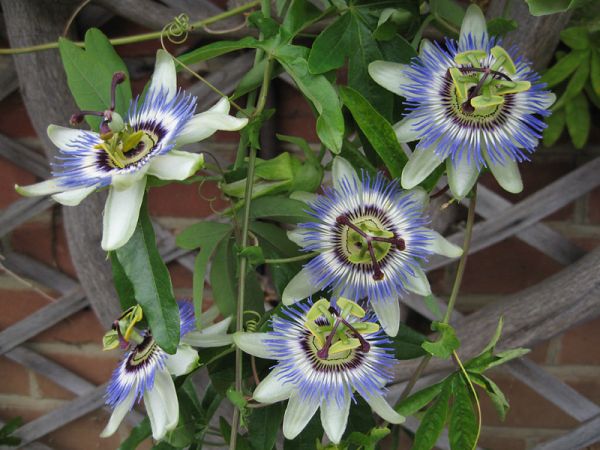
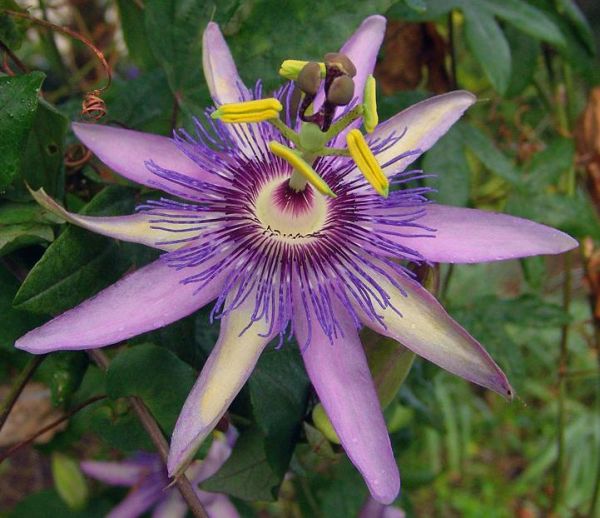
More than 400 species of the genus Passiflora are known, growing mostly in Central and South America, with a few in Asia, Australia and Madagascar. They are fast-growing plants with alternate, palmate or lobed leaves and ornamental, colourful, large flowers with a radiating, thread-like corona (symbolising the Passion of Jesus Christ). The flowers are borne singly or in clusters in the leaf axils. The individual parts of the flower are said to resemble the instruments of Christ's Passion, hence the name (from Latin passio – suffering, flos – flower). Passion flowers are white, blue, pink, crimson or purple, with a differently coloured corona. Around 10 species are currently cultivated. They are suitable for decorating windows or balconies and need supports, trellises or bent wire hoops. The fruits of most species are edible, and the fruit of the giant granadilla is known as passion fruit (maracuja).
Requirements
The plants can be grown in full sun, at a south-facing window or on a balcony. Passion flowers love heavy, calcium-rich soil. Make sure there is good air circulation.
Propagation
Propagate from semi-ripe stem cuttings, each with at least 2 leaves; remove the tendrils. At 25–30°C they root quickly. Passion flowers can also be grown from seed, but seedlings flower less well. Division is also used: after lifting, the mother plant is split into individual shoots with a piece of root, which are planted in separate pots.
Care
Use a mix of leaf mould, turf loam, peat and sand in equal parts, or high-moor peat with added conifer bark, cold-frame or manure soil, sand and weathered clay. In a sunny position the plants need frequent misting, plenty of water and air. Avoid waterlogging the compost, however, especially in autumn. During growth feed with a 0.2% solution of compound fertiliser. From August reduce watering and stop feeding.
In winter, until February, the plants rest in a bright, airy place at 6–8°C. In March, when new shoots begin to grow, repot the plants (every 2–3 years) or replace the top layer of compost in the old pots with a fresh mix.
Some passion flower species and varieties are resistant to winter cold, but the most commonly grown ones are exotic and cold-sensitive. Hardier plants can be planted in the garden or put out in containers. Garden plants should be covered before winter, e.g. with straw, while plants in containers are moved to a warmer room for the winter.
Do not let new shoots tangle with each other's tendrils, as this reduces flowering. As new shoots grow, tie them to fairly thin supports so that their tendrils can twine around them in time.
When plants get sick
Leaves turning yellow – too little light.
Aphids attack young, tender shoots. Use a suitable product.
Discoloured patches on the leaves may be caused by spider mites. Check the undersides of the leaves; if the plant is infested, use a chemical product.
Before you buy
Check that the plant has fresh green leaves and a few buds.
Average lifespan: – Can live for a very long time.
Difficulty of care: – Very easy to look after.