Description
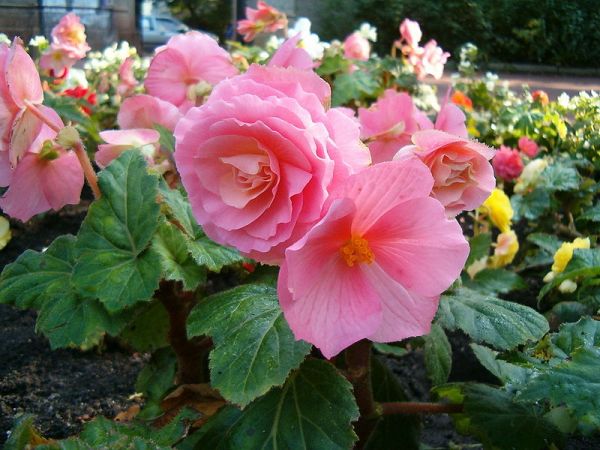
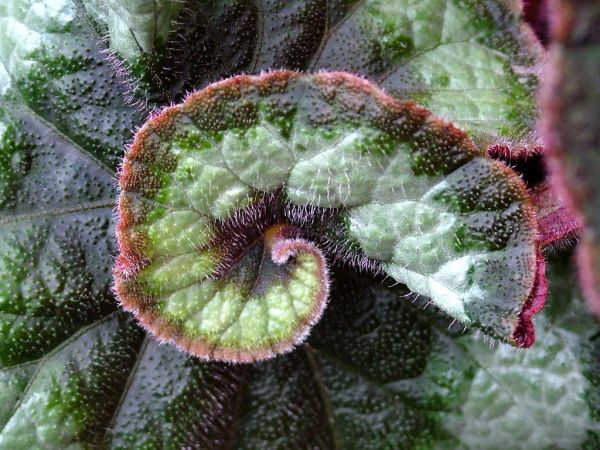
The tuberous begonia is grown as an annual and belongs to the begonia family (Begoniaceae). It is a hybrid created by crossing many begonia species that grow wild in Bolivia, Ecuador and Peru. It forms tubers from which fleshy, short, branching stems 15–20 cm tall grow. The leaves are thick, asymmetrical, heart- to lance-shaped, on fairly long stalks. Both the leaves and the leaf stalks are covered with long, sparse hairs.
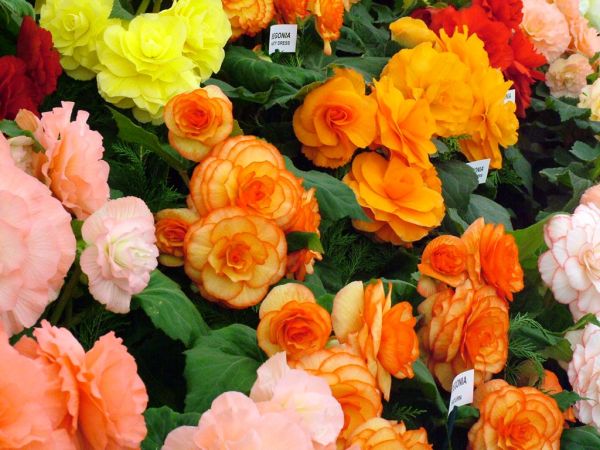
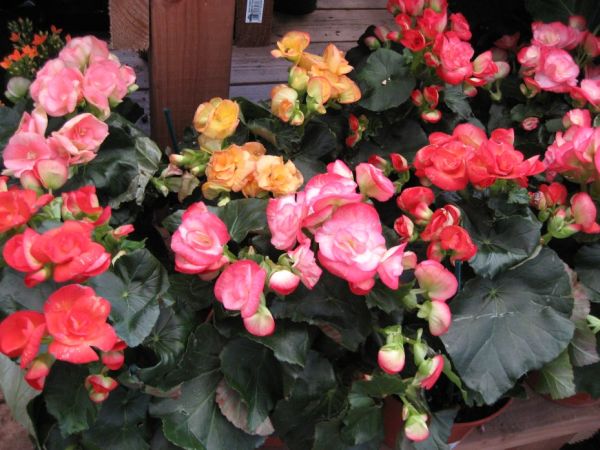
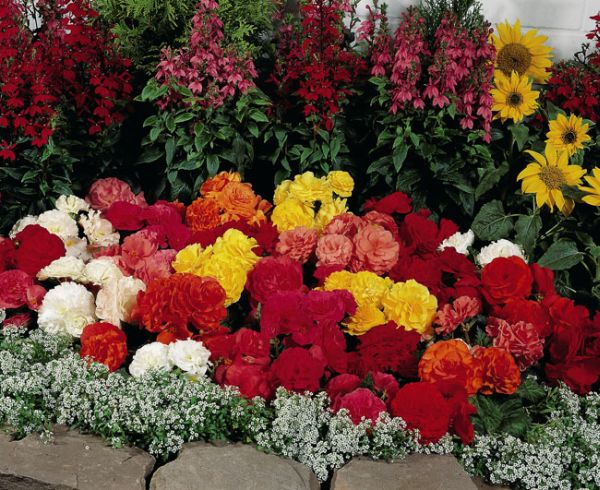
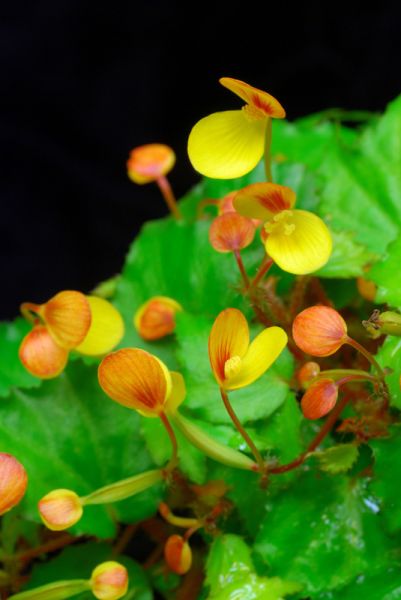
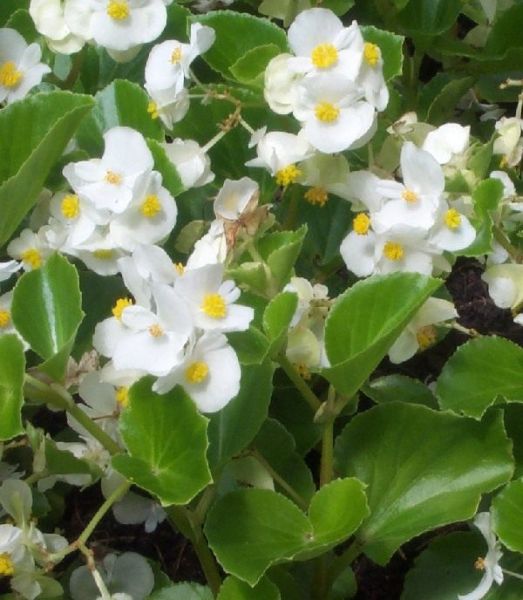
The tuberous begonia flowers from June until the first frosts. Many varieties are available, differing in the size and shape of their flowers.
Requirements
The tuberous begonia needs humus-rich, slightly acidic soil and a shady position. It is sensitive to low temperatures, so it should be planted out only at the beginning of June.
Propagation
This species is propagated by seed. Remember, however, that plants grown this way flower only at the end of June or beginning of July. It can also be grown from tubers, in which case the flowers appear earlier. When growing from tubers, proceed as follows: after the first frosts, lift the tubers, cut off the stems leaving 5 cm stubs, dry the tubers at 15°C, clean them and store them lightly sunk in moist peat in a room at 7–8°C. At the beginning of February plant the tubers in trays. Keep them at 18°C at first, and lower the temperature once the plants have produced shoots. In April plant the begonias in cold frames or pots. They start flowering at the end of May.
A third method is to divide the tubers. At the beginning of March bring the stored tubers into a greenhouse and water the compost. Once buds appear, divide the tubers, dusting the cut surfaces with powdered charcoal, and after they have dried plant them shallowly in trays, which are moved to a cold frame. Tuberous begonias can also be propagated from cuttings taken from the first shoots of tubers planted in January–February. Cut the shoots just below a node and insert them shallowly in a peat compost mixed with sand or perlite. Cover the trays with a sheet of glass and keep them at 18–22°C. Plant out in the final position in the second half of May, 20 x 25 cm apart.
Care
Unlike other begonias, they tolerate sunny positions. They need humus-rich, fairly fertile, free-draining, acidic soil. The begonia is a demanding plant that copes poorly with cold, windy and wet conditions, so in cool, wet summers it flowers less well. It is mainly propagated by seed, but because this is troublesome and it takes a long time from sowing to a flowering plant, it is better to buy ready-grown young plants.