Description
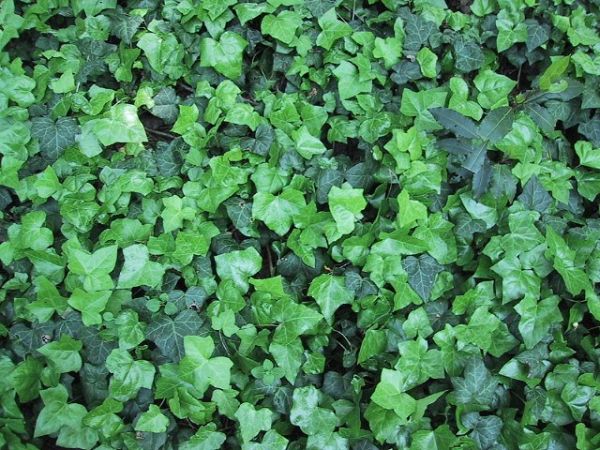
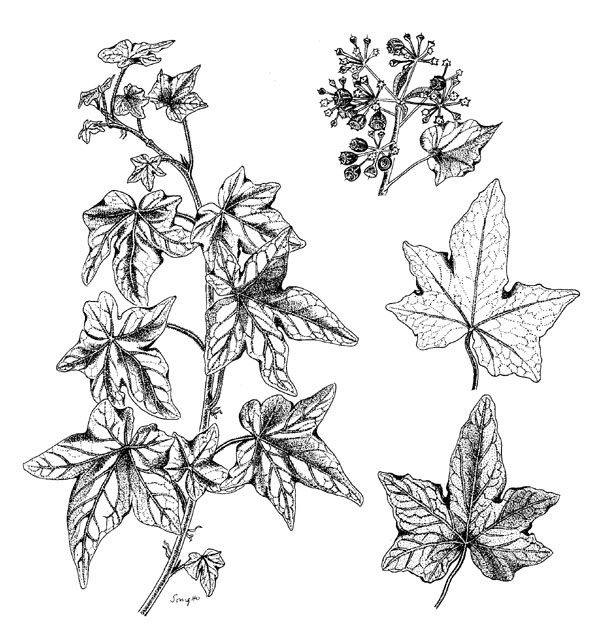
Hedera helix, English ivy, comes from Europe and Asia, where it grows in woods on calcium-rich soil. It is a trailing or climbing shrub that climbs using clinging roots. It can grow up to 30 metres tall, and its trunk is sometimes a metre in diameter.
Ivy was written about by many ancient authors. Together with the grapevine, it was the symbol of the wine gods Dionysus and Bacchus, a symbol of merriment.
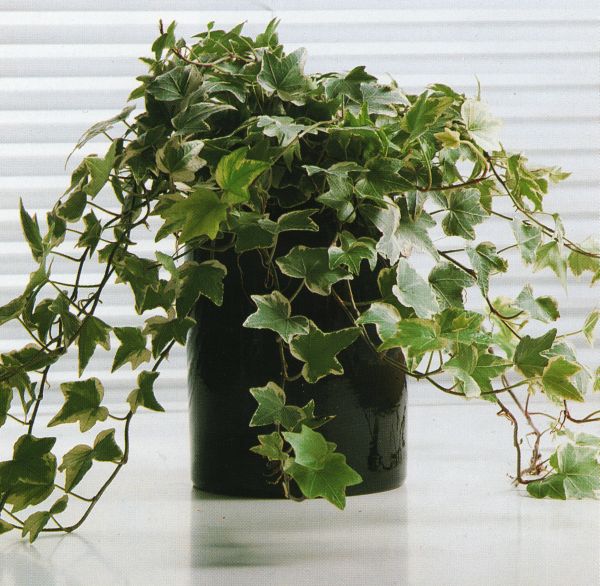
Ivy is excellent for growing in a hanging basket or in a pot, on its own or with other plants. The plant does well in a cool room, such as a hallway. It can also be placed on a north-facing windowsill.
Requirements
Although ivy is undemanding, it has specific watering needs. It does not tolerate waterlogged roots, but the root ball should not dry out either. If you want the plant to grow lushly, feed it with liquid fertiliser once every two weeks. It also needs a short rest period in winter, although it can do without one.
Ivy also tolerates a shady position. Varieties with multicoloured leaves need more light, however, otherwise the leaves lose their decorative colouring and turn plain green.
The plant tolerates warmth well: 15–20°C in summer and 5–10°C in winter. Do not put it on a windowsill above a radiator; any other spot is suitable.
Propagation
Ivy can be propagated by layering without any problems. Choose a long, strong, healthy shoot with plenty of aerial roots and make a cut in the bark with a sharp knife just below the base of a leaf stalk. In a pot filled with fertile soil, lay the shoot so that the cut is in the soil, and pin it down with wire. Once roots have formed, separate the shoot from the mother plant.
Propagation from cuttings: take cuttings in spring or summer and plant them in soil mixed with peat. Several cuttings can be planted in one pot, which gives a better chance that new plants will grow.
Care
Repot ivy every two years, always into a larger pot filled with ordinary potting compost.
It needs evenly moist soil at all times and does not tolerate waterlogged roots. Fed regularly, it produces long shoots.
To make the plant branch, regularly pinch out the shoot tips. Pruning lets you shape the plant as you wish.
When plants get sick
Black spots on the leaves – a sign of fungal disease. Remove the damaged leaves and spray the plant thoroughly with a fungicide.
Leaves turning black – the cause is overwatering, usually in winter.
Leaves turn yellow and fine webbing appears on the undersides – this means spider mites. They are very hard to fight. Spray the plant several times with an insecticide and mist it regularly with water.
Aphids and scale insects – remove with a cotton bud soaked in methylated spirit. They can also be controlled with an insecticide.
Silvery or white spots on the leaves – a sign of thrips, small black winged insects, which are controlled with products containing pyrethrum.
Before you buy
Ivy is available all year round. The pots are usually small, so it is best to repot the plant straight away into a larger one.
Average lifespan: – long-lived.
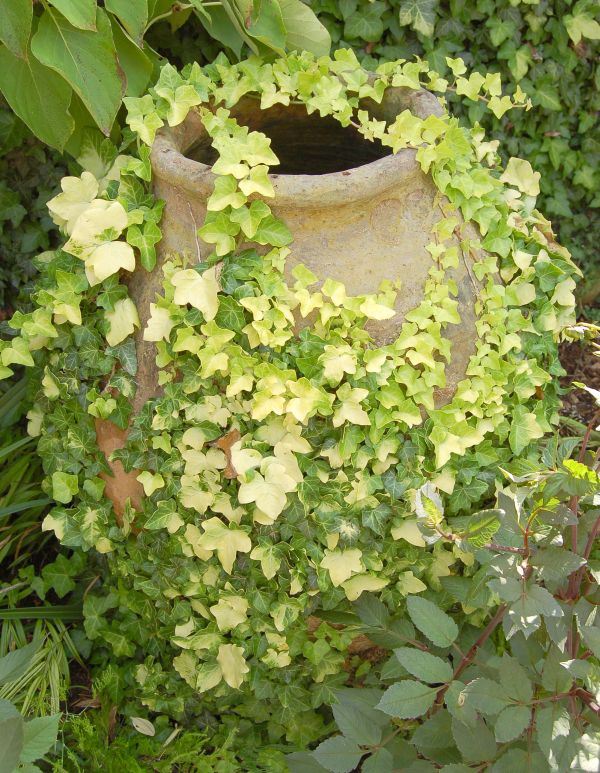
Varieties: – crossing has produced many varieties, grown mainly as houseplants. Florists sell dozens of ivy varieties, climbing or trailing, with leaves 3 to 7 cm long, in various colours: green or grey-green, speckled yellow or white, yellow-green or white-edged.
Difficulty of care: – an easy plant to grow, suitable for beginners.
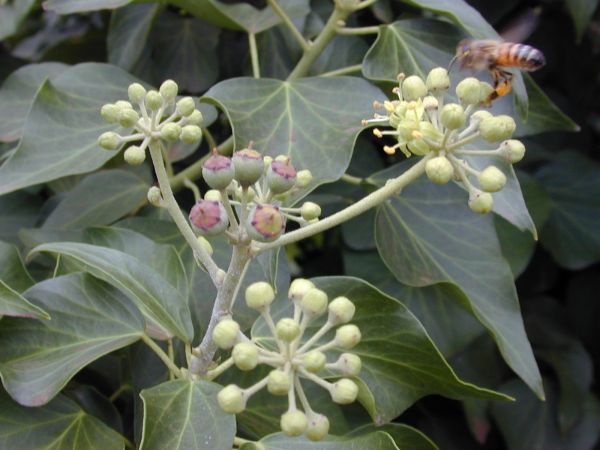
Season: – ivy is very decorative all year round. It flowers only after 8–10 years, once it has reached a certain size. The yellow-green flowers have a sharp scent and are decorative. The fruits – blue-green berries the size of a pea – are poisonous. Ivy flowers more often outdoors than indoors; it flowers in autumn, and the fruits form in winter.