Description
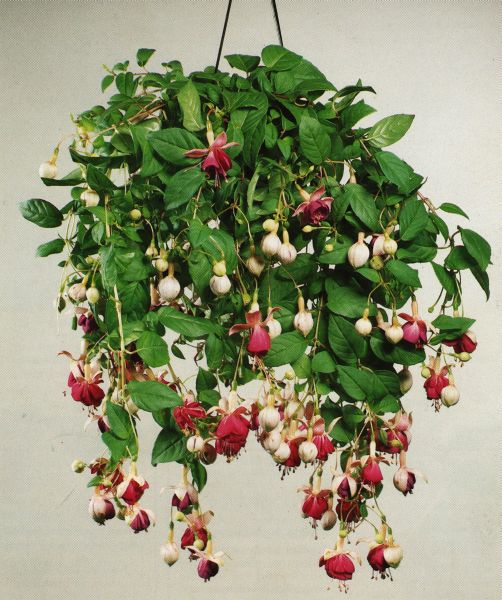
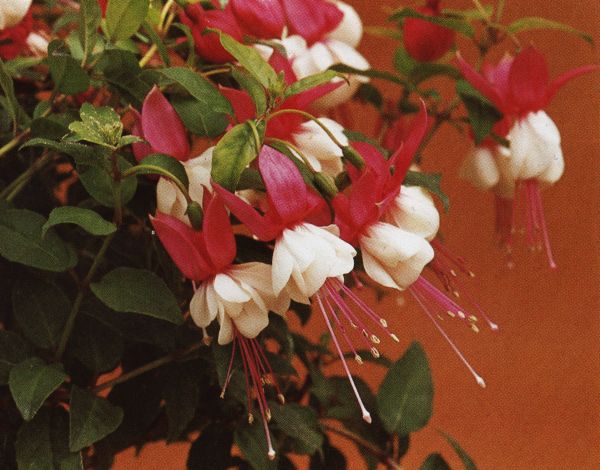
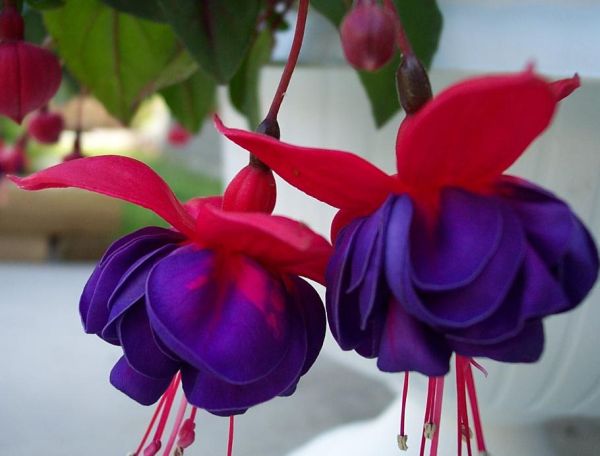
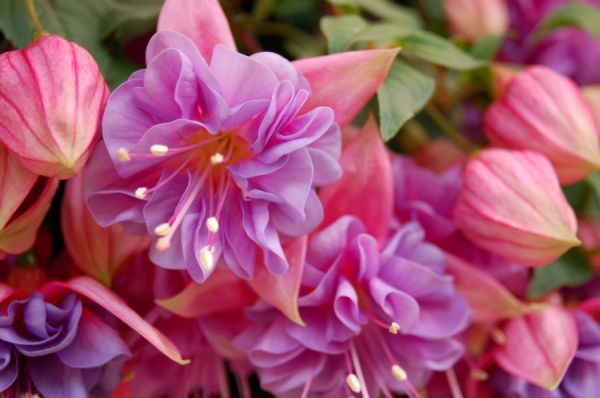
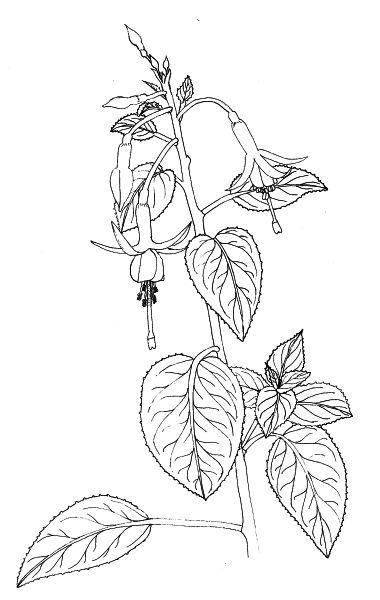
The fuchsia is almost a symbol of summer. Its romantic, gently nodding red and white flower bells can be seen everywhere – on terraces, in balcony boxes, on windowsills.
The name fuchsia comes from Leonhart Fuchs, a German physician and botanist. The plant comes from South and Central America, New Zealand and Tahiti. It became established in Europe around 1800.
There are more than 100 botanical species, and over time an enormous number of varieties have been created. There are herbaceous perennials, woody forms, low plants that fit in pots, and standards that need large containers. There are also trailing and climbing fuchsias for hanging pots, frost-hardy garden shrubs and varieties suited to windows and balconies. Most fuchsias are hybrids.
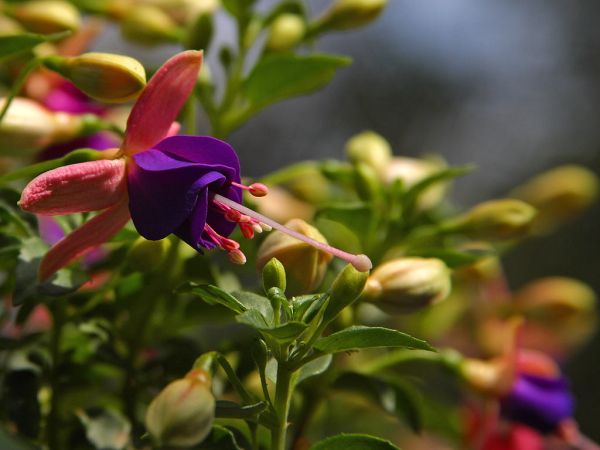
Fuchsias start flowering at the end of April and continue until October. The faintly scented flowers are mostly in shades of red and purple.
Requirements
A fuchsia looks its best in a lightly shaded, cool place with slightly increased air humidity. In summer it can stand outside, and in winter at 6–10°C. In summer keep it constantly moist; in winter water more sparingly.
Propagation
Fuchsias are propagated almost exclusively from stem cuttings. Cut green tip shoots in summer and woody ones only in spring. They root quickly in water or in a mix of peat and sand. New varieties are obtained from seed, but this takes a long time.
Care
Water overwintering plants only a little and do not feed them. In early March, once the plant has started to grow, cut it back by a third and trim it to the desired shape. The cut-off parts can be used as cuttings. Slowly start feeding.
From May water generously and feed every 10 days. The plants can be put outside. Remove faded flowers to stop seed forming and encourage new flowers. Watch out for whitefly.
In September prepare the plants for winter – bring them indoors and clean them up. Remove yellow leaves and cut off the last flowers. Above all, get rid of all pests and their eggs.
From November all fuchsias should stand in a cool place, with reduced watering. This is their rest period.
When plants get sick
Leaves dropping in summer – the cause is unsuitable temperature: it is too cold or too warm.
Leaves dropping in winter – partly normal. If the branches are bare, the plant is too warm, too shaded or overwatered.
Aphids – occasionally appear under the leaves. Isolate the plant and spray it with an aphid treatment. A shower with soapy water and spirit also helps.
Whitefly – spraying with insecticide must be repeated several times at weekly intervals.
Before you buy
Fuchsias are sold in spring, when they are full of flower buds. All parts of the plant should be fresh and juicy. Flower stems must not be wilted or drooping. Check that the plant is not infested with pests.
Average lifespan: – it can live many years and can even be grown into a small tree.
Difficulty of care: – an easy plant to grow if it is in the right place, in light shade and cool conditions.