Description
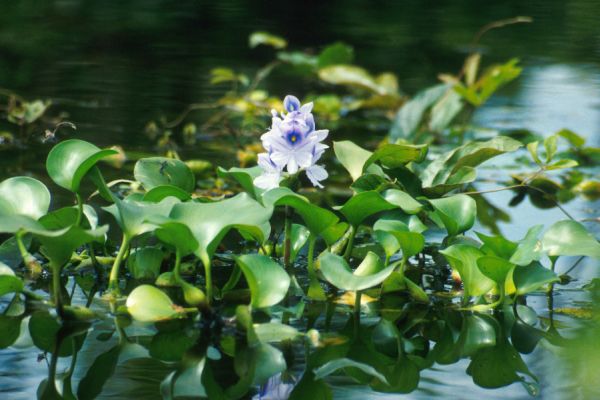
Eichhornia is a rather lush aquatic plant from the tropical regions of South America. It reached India in 1902 and Africa in 1950, brought by people fascinated by its beauty. It is also available in Poland and can be bought in garden centres selling water plants.
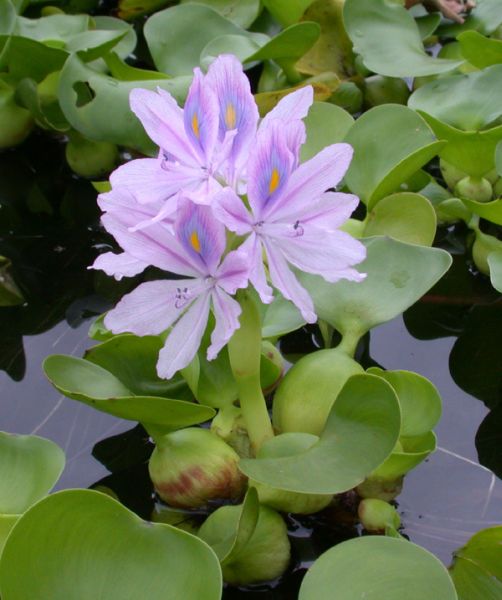
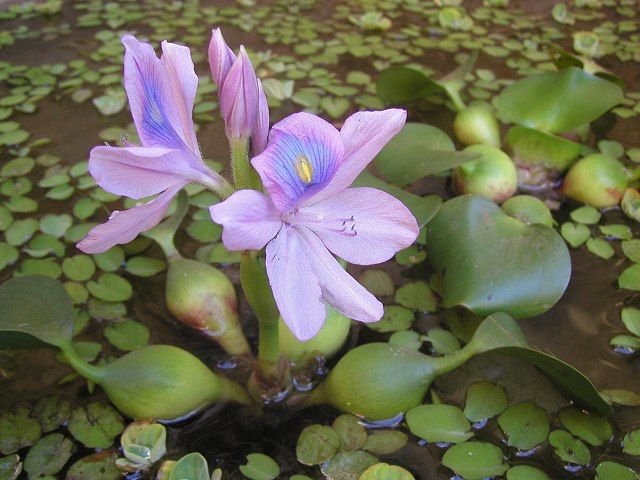
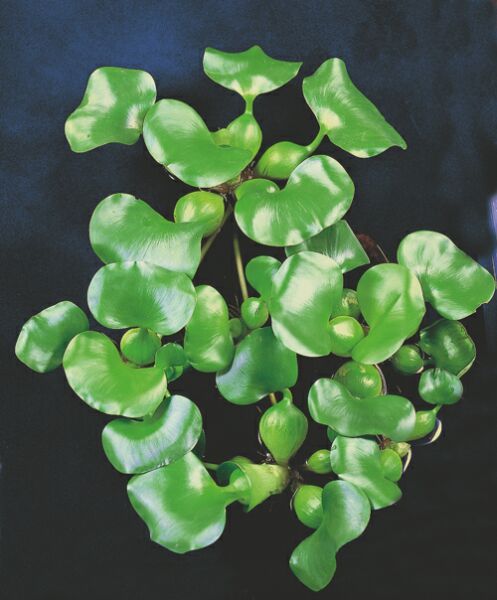
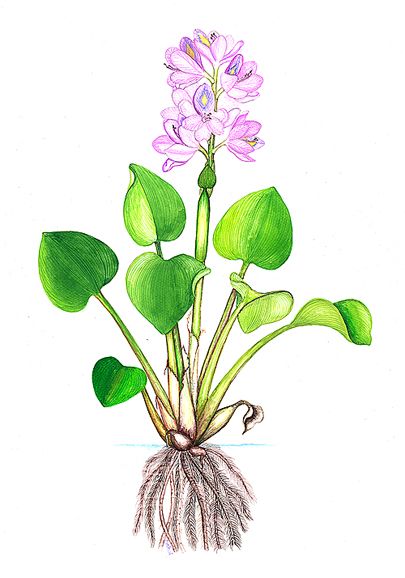
The leaves grow in rosettes; at the base they are shaped like thick bladders. The whole plant, including the flower spike, is no more than 20–30 cm tall.
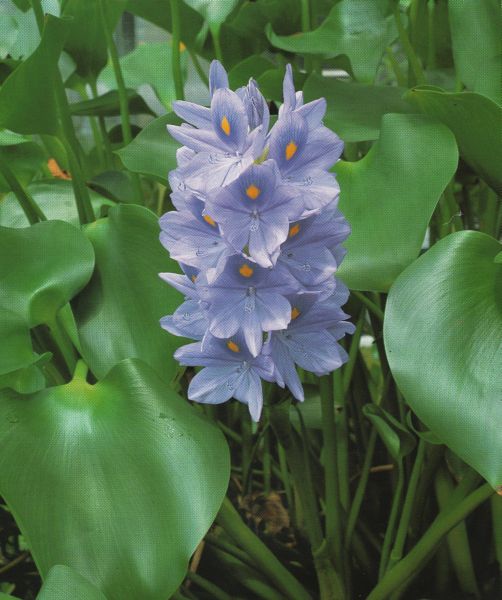
All summer it bears blue-violet flowers set in spikes. In still weather you can smell their sweetish scent.
Requirements
In mid-June, when the water temperature is above 18°C, the plants start to grow. Eichhornia does not like lower temperatures. Remember that the shallower the pond, the faster the water warms up. Eichhornia is not frost-hardy. If the temperature drops to 15°C, take it out of the water and bring it indoors, where it can grow in an aquarium kept in a bright, not too cool place.
Propagation
This plant multiplies exceptionally fast and spreads like a plague. Its lush growth in rivers and lakes can practically bring navigation to a halt. Reproducing vegetatively, it doubles its numbers roughly every 14 days. Start with 10 plants and in six months you could have half a million. No wonder it is often regarded as a real pest and fought with chemicals – which is not a safe method, as it can upset the biological balance of the water.
Care
Place water hyacinth in a sunny, not too deep pond.
Aquatic plants do not, of course, need watering. Feeding is not needed either, as it takes its nutrients from those naturally present in the water.
Eichhornia needs no soil – it floats on the surface of the water. It is not pruned; when the pond becomes overgrown, some of the plants can be removed.
When plants get sick
Water hyacinths are strong plants that rarely get sick and are not attacked by pests. The biggest challenge is overwintering them properly. If the room temperature is too high and the medium too wet, grey mould can appear. Restore the balance between moisture and air temperature; with a more serious attack of grey mould, use a fungicide.
Before you buy
Average lifespan: – it can live a very long time, provided it is overwintered properly.
Difficulty of care: – very easy.
Season: – summer is the main season if grown outdoors; otherwise all year round.