Description
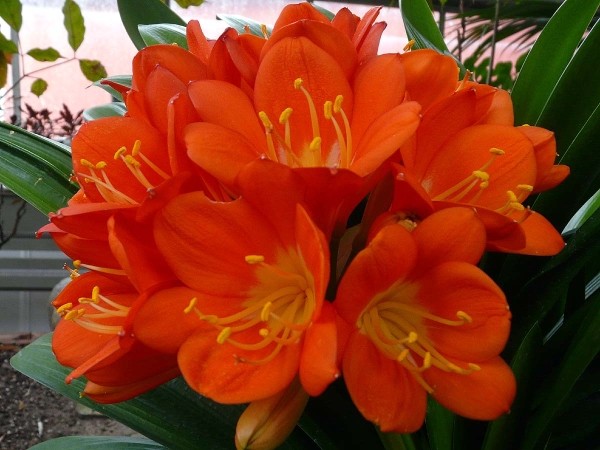
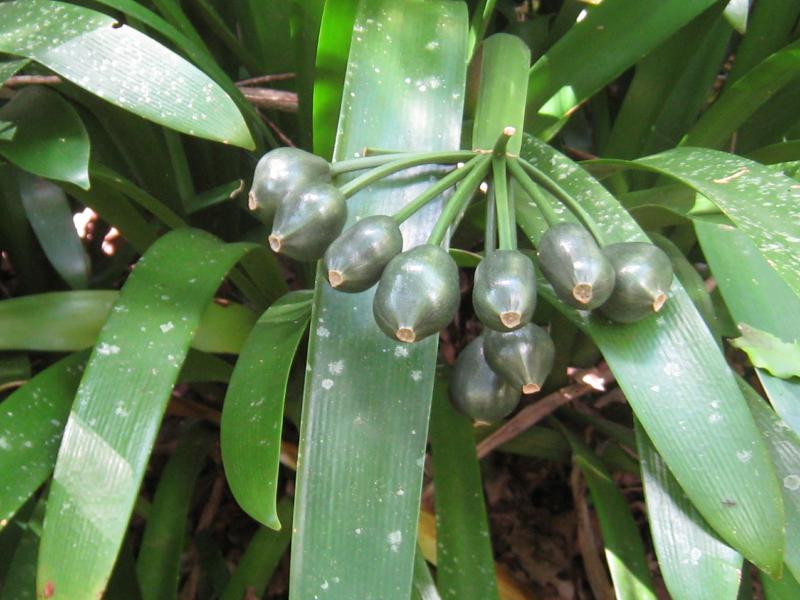
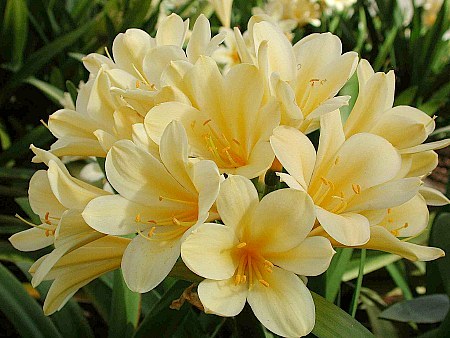
Clivia comes from South Africa and has dark green leaves and orange flowers. It is named in honour of Lady Clive, Duchess of Northumberland, a name in use since 1866 when a new classification was introduced. Its former name was Himantophyllum.
The genus Clivia includes three species.
One of them, Clivia miniata – orange clivia, is widely grown. You may also come across Clivia nobilis – green-tip clivia, which is more modest in appearance and less demanding than the former.
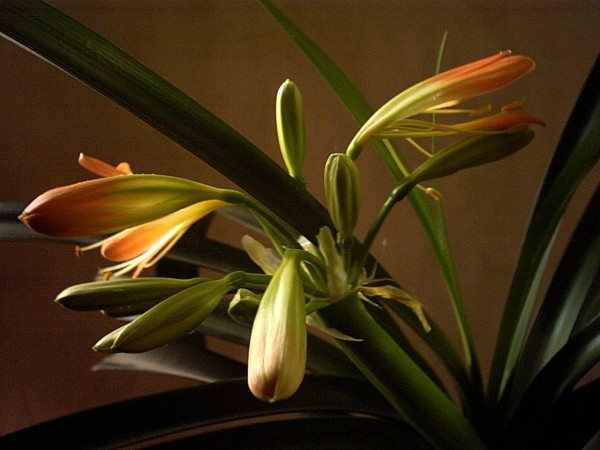
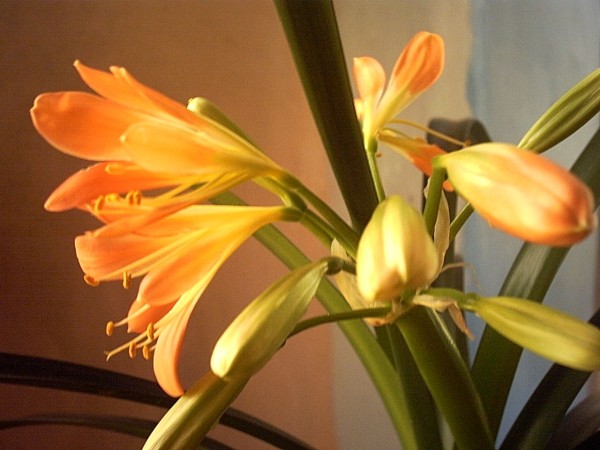
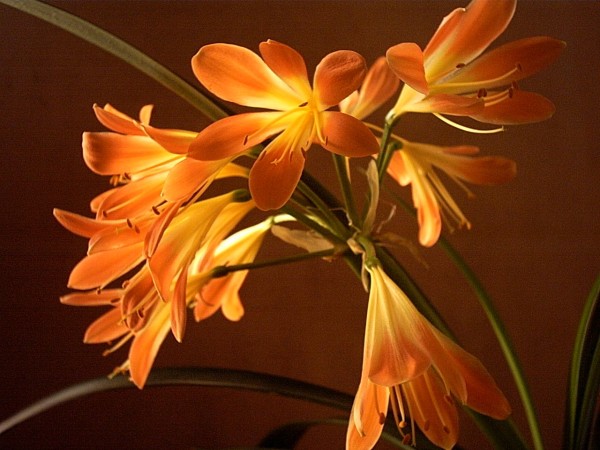
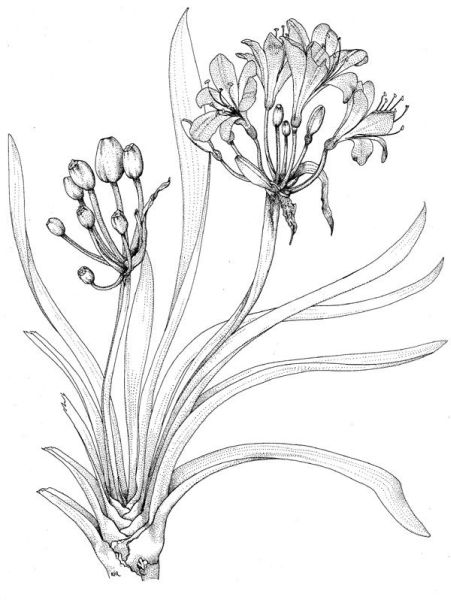
It is a bulb-like plant, although its roots only slightly suggest this: they are thick, fleshy and grow in clusters. From a short, thickened stem, narrow evergreen leaves grow in early spring. New leaves appear in pairs, sometimes forming a new base. From the centre grows a stem topped with a large umbel of 10–12 orange-red flowers. The plant is 25 to 50 cm tall. A well-cared-for clivia can flower a second time in autumn, and if you do not separate the young plants that form after flowering, you can grow a very large plant with many flowers.
A beautiful plant that will flower and grow steadily if its needs are met. A short flower stem squeezed between the leaves may be caused by temperatures that are too low while the flowers are forming, i.e. until October.
Requirements
Clivia is an undemanding plant.
A sunny or partially shaded position, 20°C in summer and about 10°C in winter, moderately moist compost, with the root ball dry in winter; feed once a week in spring and summer.
It is important to keep the plant in the same place whatever the season. Do not turn the pot either – it is a good idea to mark its orientation towards the sun.
Propagation
Clivia is propagated by separating offsets or from seed. Remember that the young plants formed at the base can be separated no earlier than in their second year (they should have at least 4–5 leaves). Separate the roots first. Propagation from seed takes a long time – several years pass from sowing to flowering.
As for repotting, the rule is that the older the clivia, the less often it should be repotted. Repot every 2 years after flowering, separating side shoots with at least 4 leaves at the same time.
Repot young plants every year just after flowering.
Care
Grow in standard potting compost. During growth the compost should always be slightly moist, but do not let water stand. From October to January give clivia a bright, cool spot (about 12°C) and water less. At all times try to keep the plant in the same position relative to the light – clivia does not like being turned or moved, which can affect flowering. A lack of flowers is also often the result of unsuitable conditions during the rest period.
When watering, avoid standing water and permanently wet roots, which are the main reason plants die. In winter water little, depending on the temperature – usually very little – and feed every 4–6 weeks. Mist it when new leaves and flowers appear, and wipe the dust off the leaves from time to time. The growing medium is standard potting compost, possibly with added clay.
Notes
A fairly common problem with clivias is that they do not flower. The cause may be unsuitable overwintering conditions. Too little warmth at the end of winter can result in a "frozen", stunted flower stem.
Overwintering somewhere too warm encourages scale insects and mealybugs.