Description
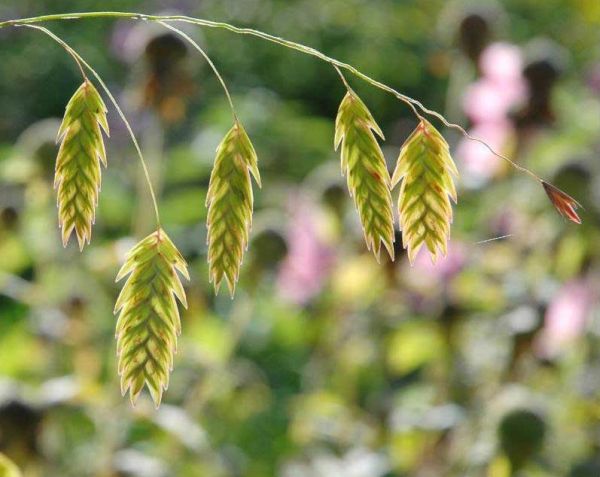
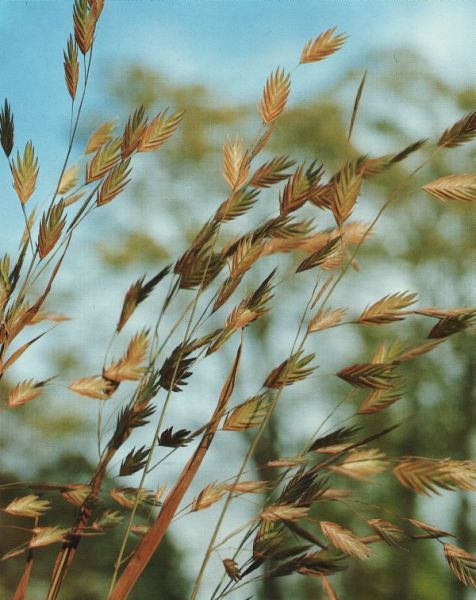
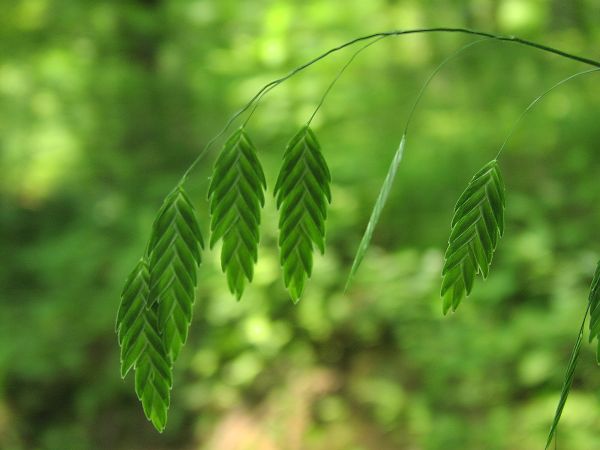
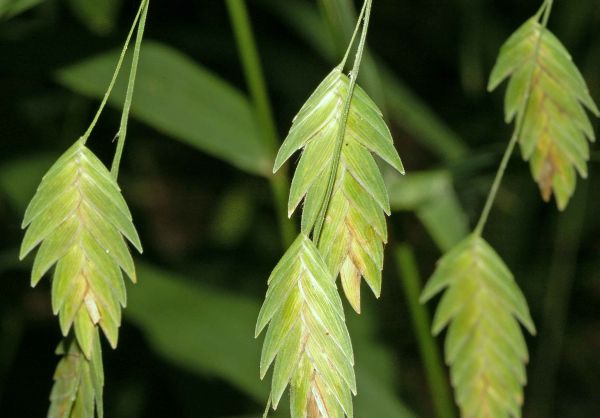
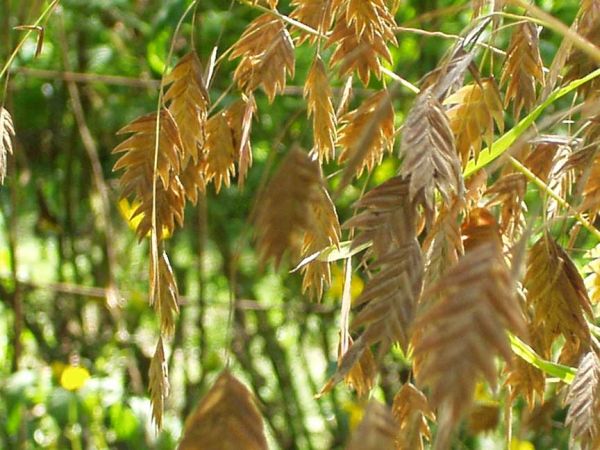
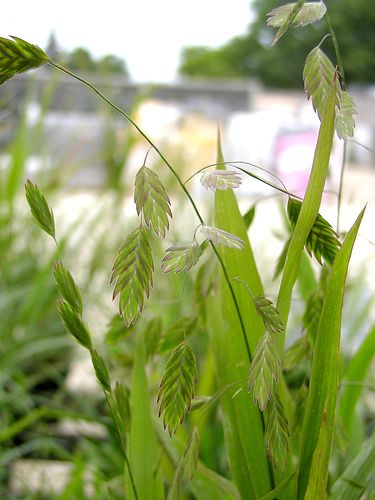
Uniola latifolia is a perennial grass suitable for cutting. In a suitable, not too sunny position it grows up to a metre tall. It comes from North and Central America, occurring mainly in Florida, Texas, Alabama and several other southern states. The Latin name "latifolia" means broad-leaved – its leaves can be up to 2.5 cm wide. This grass forms very decorative spikelets. Like other grasses, it does not produce "true" flowers; its inconspicuous florets give off a faint scent.
Requirements
It is an undemanding plant that is very rarely attacked by pests. It looks best in a meadow full of flowers, and also very attractive in a special garden of different grasses.
Propagation
It is best to buy it at a garden centre, as growing it from seed is very laborious and not always successful. Do not buy plants that are too young – two-year-old plants are best. It is planted in the garden.
Sowing:
April–May
Sow the seeds indoors in large bowls. Move the seedlings to small pots filled with a mix of soil and sand.
June–July
Move the plants outdoors, ideally on an overcast day, to a spot sheltered from wind, which could break the stems.
September–October
The grass can be cut back before winter.
November–February
Cover young plants with conifer branches to protect them from frost.
April–May
The following year move the plants to another place.
June–August
In summer water the plant generously. The soil should not dry out completely.
September–October
The young plants flower for the first time. Cut the spikes, tie them in bunches and hang them in a dry, airy place.
Care
Uniola can only be grown outdoors. It grows at normal temperatures and does best in a spot sheltered from the wind; partial shade is ideal.
During growth the soil should never dry out completely, so water the grass regularly and feed it with liquid manure once a week.
Ordinary garden soil is enough. Move the plant only if it spreads too much.
Uniola is not pruned – the whole grass is simply cut down.
When plants get sick
In a suitable position and with its basic needs met, uniola does not get sick or suffer from pests.
Before you buy
Uniola is a perennial grass that comes back every year.
Average lifespan: – A perennial plant.
Difficulty of care: – Grasses are very easy to grow and undemanding. Strong wind can break the stems.
Season: – Its season is the flowering period, September–October, though that is not when it looks most decorative.