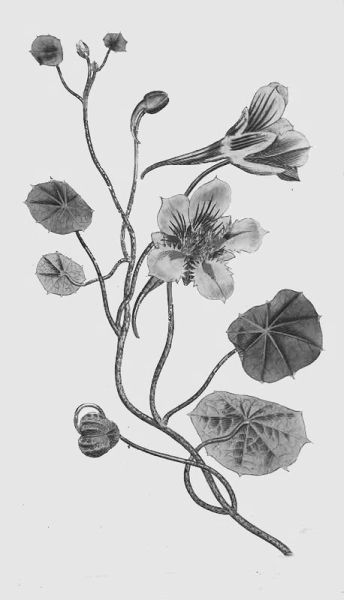
Description
The garden nasturtium is native to Peru and Bolivia and has naturalised on the Juan Fernández Islands west of Chile. It was brought to Central Europe by the Dutchman Bewering in 1684. In Poland it is grown as an ornamental plant.
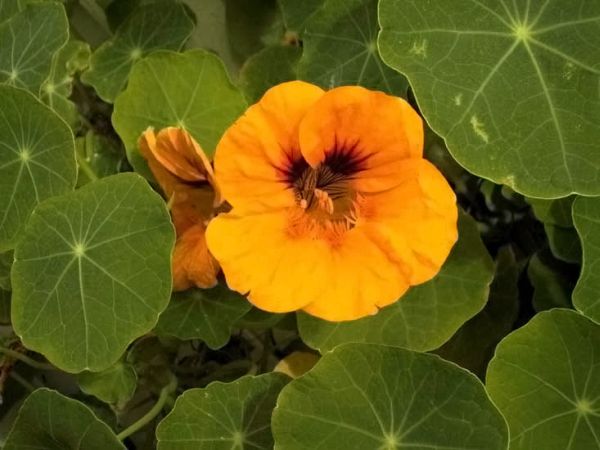
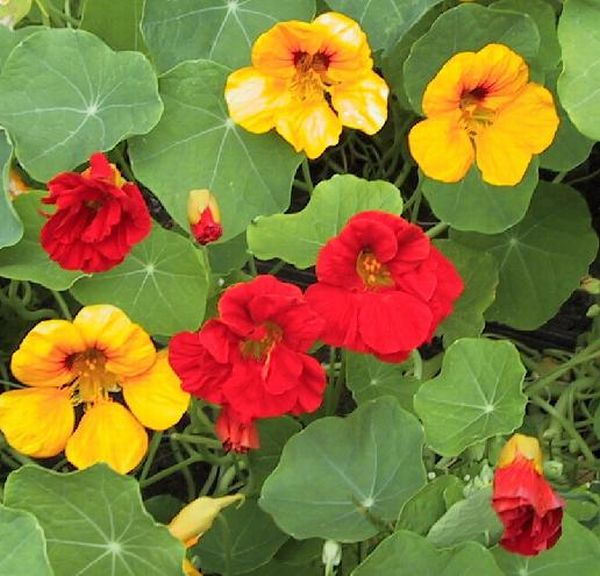
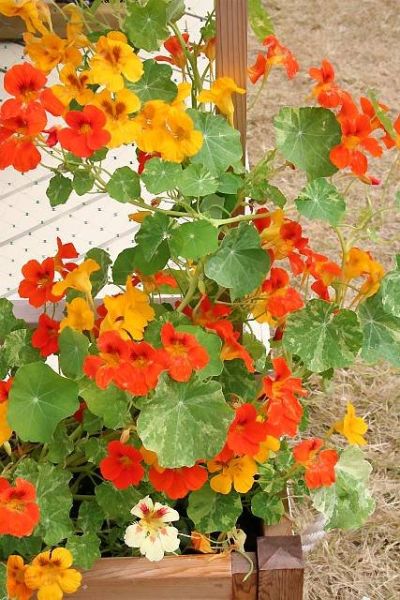
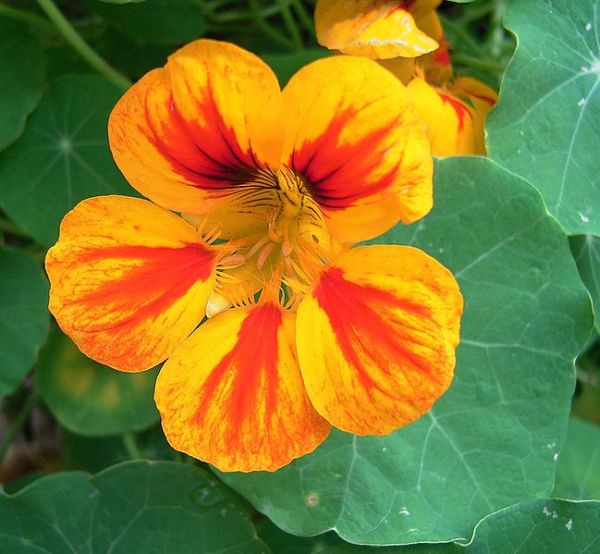
The garden nasturtium is an annual of the nasturtium family. It has smooth, strongly branched and leafy, more or less trailing stems. The shield-shaped, smooth leaves sit on long stalks. Nasturtium flowers from June until autumn. The flowers consist of five petals narrowing into fairly long "claws", and the sepals extend into a spur.
Long-stemmed nasturtiums are used to cover arbours, pergolas and fences, and are also planted in hanging containers. Dwarf nasturtiums are excellent for edging borders and for balcony boxes and bowls. The flowers are suitable for cutting.
Requirements
Nasturtium likes loamy-sandy, fertile, humus-rich but not overfed soils and a sunny or partially shaded position. In dry summers, plants that are watered too little are attacked by aphids.
Propagation
Sow seeds directly outdoors in April–May, 2–3 seeds per hole, 20–30 cm apart.
Care
During growth water regularly, especially in dry weather. Feed minimally. The plant grows well in almost any soil, but prefers nutrient-rich garden soil. Nasturtium does very well in sunny places and also grows well in partial shade.
When plants get sick
Butterfly caterpillars can eat the leaves in a short time. Control them with chemicals at an early stage.
Aphids can do serious damage. They usually occur on the stems, but can also be found under the flowers and leaves. Control them by carefully washing with lukewarm water.
Before you buy
You can buy either young plants or seeds. When buying plants, check that they are free of pests.
Average lifespan: – An annual plant.
Difficulty of care: Apart from a sunny spot, nasturtium has no requirements.