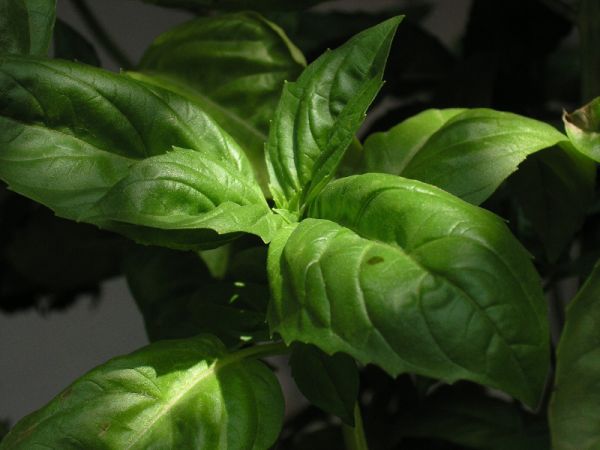
Description
Sweet basil (Ocimum basilicum), also known as common or garden basil, is a cultivated annual of the mint family (Lamiaceae). It comes from tropical Asia, from the region of Iran and India.
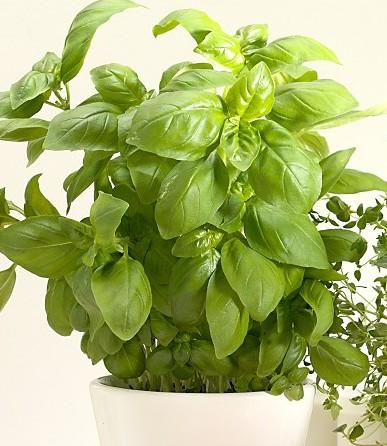
It is a plant with many uses. Not only does it taste wonderful in salads and fish dishes, but its strong scent, which people love, also keeps insects such as flies out of the kitchen. Basil is a well-branched plant with many leaves that give off an aromatic scent.
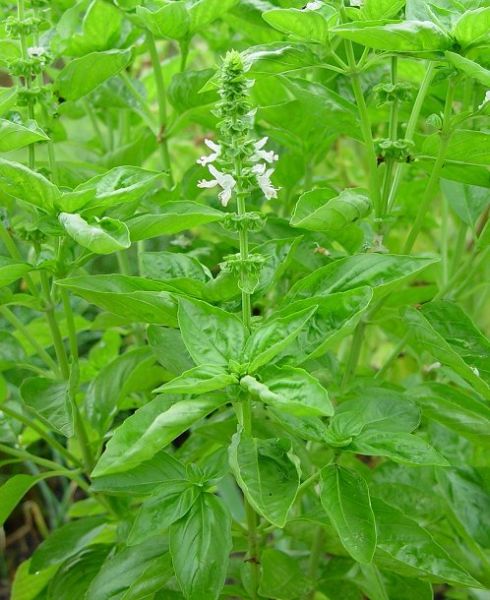
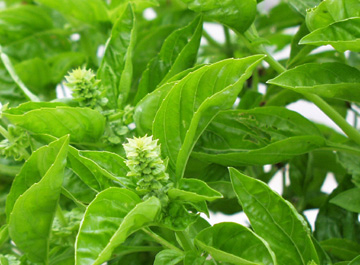
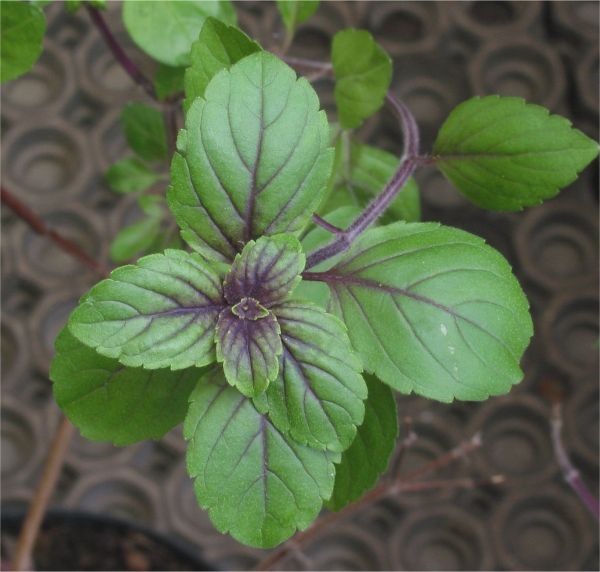
There are many varieties of basil. Green basil, also called 'Maximum', grows to 40 cm and has large, light green leaves and white flowers. Dwarf basil, 'Minimum', grows to about 25 cm, with small leaves, purple flowers and a very delicate flavour. There is also red basil with purple leaves and flowers.
All kinds of basil branch strongly and tolerate cutting well. At first they grow relatively slowly, but after a few months they gain strength and produce many leaves. If you pinch out the shoot tips early, the plant will become really bushy.
In Eastern countries the small basil seeds are used to make a refreshing drink: they are added to juice or mineral water. When they swell, they look like fish roe. Such a drink also aids digestion.
In the Middle Ages basil was burnt to ashes, but only at new moon. The ashes were said to heal and even remove warts. As the plant was reputed to ease labour pains, it was also called "the midwives' herb". Today basil is used as a seasoning – pungent, but in its own delicate way.
Requirements
Basil loves the sun, but an east-facing window also suits it.
The ideal temperature is 20°C, but it also tolerates a drop to 15°C.
Basil must never dry out. It needs fertile soil that does not dry out too quickly.
It should be placed at south- or east-facing windows.
Propagation
Basil is usually propagated from seed, but also from pieces of shoot. Sow the tiny seeds in March in pots with a mix of soil and sand, placing them on the soil and covering them with a layer of sand. They take a long time to germinate, but by June the plants are big enough to be moved to larger pots. At the beginning of August, before flowering, the shoots can be cut into pieces and planted. To stop them drying out at first, pull a plastic bag over the pot of cuttings and leave it until the plants have rooted. Keep the pot warm. If you want to dry basil, do it before flowering: cut the stems and hang them singly in a shady, airy, not too cool place. It is hard, however, to preserve the delicate scent, and it often takes on a peppery taste.
Care
Water basil generously, but not so much that water stands in the pot. Cut-back plants that are to overwinter are watered little. During growth feed every eight days.
Flower compost mixed with fertiliser is good, but ordinary garden soil is enough.
Plants grown in the garden or in a balcony box can be cut back before flowering, potted up and placed by a window.
When plants get sick
Basil is rarely attacked by diseases, but it does not tolerate cold. Even slight autumn frosts make it wilt.
Leaves turn black – the plant has been damaged by frost.
Powdery mildew or aphids – dip the plant in soapy water and then rinse it thoroughly.
Before you buy
Buy only fairly sturdy plants with fresh leaves.
Average lifespan: – Basil is a perennial, but it is usually grown as an annual.
Difficulty of care: – Easy to grow.