Description
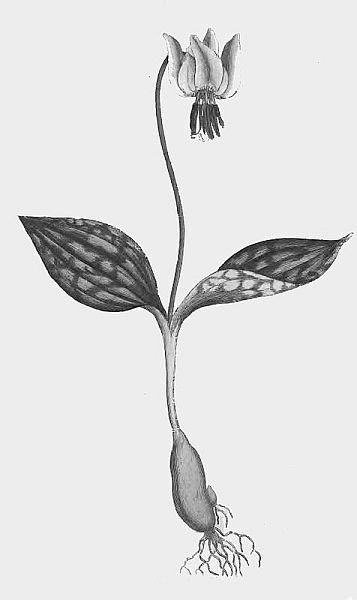
This bulbous plant got its name because its bulbs resemble a dog's tooth. It grows mainly in North America, and also wild in the mountains of southern Europe, where it often grows alongside cyclamen.
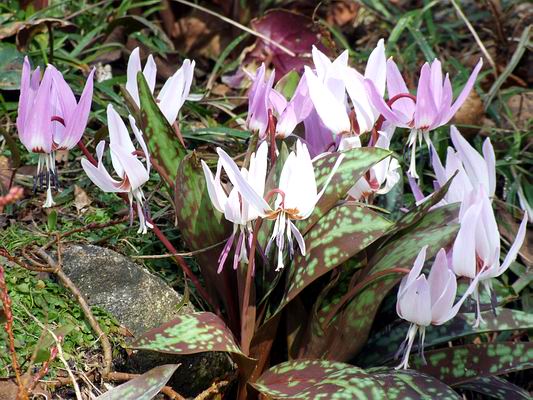
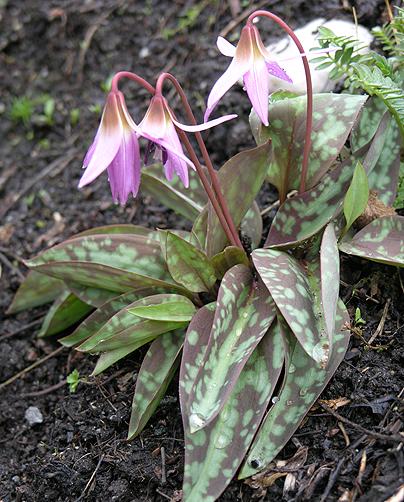
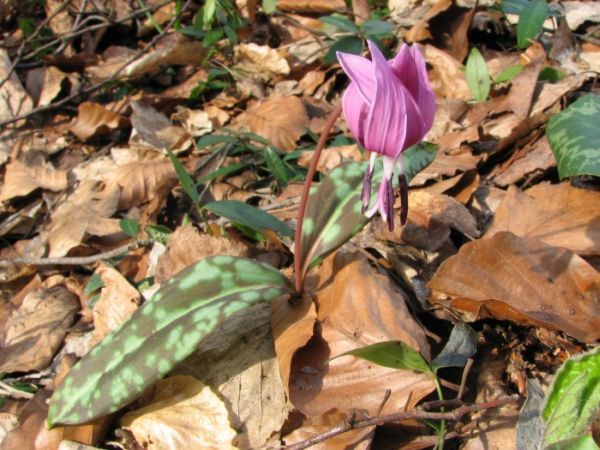
It has not only decorative flowers but also decorative leaves. The leaves are about 15 cm long and form an attractive rosette. From it grow stems about 20 cm long carrying flowers about 3.5 cm across, violet to purple in colour.
It flowers from April to May.
Plant the bulbs from September to mid-October about 8–10 cm deep in light, porous soil in a lightly shaded spot. It does not need covering in winter and should not be moved. It is propagated from offset bulbs.
In early spring the characteristic leaves appear, mottled in most species. When the temperature rises in April–May, flower buds form between the leaves.
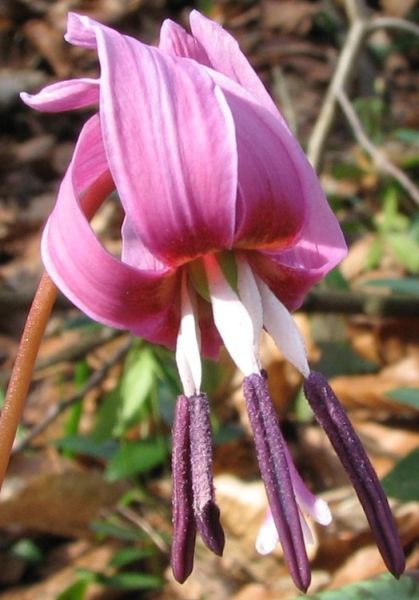
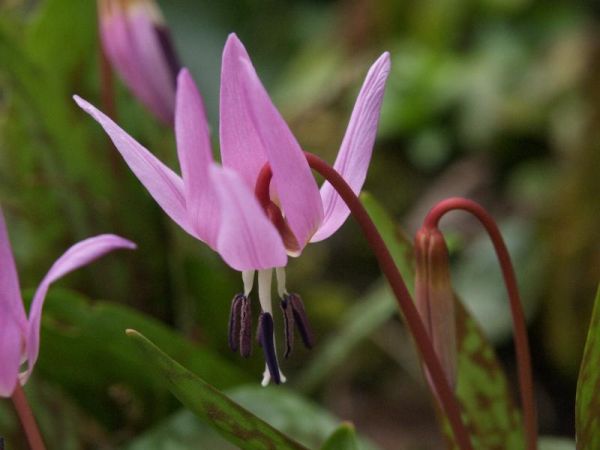
After a short time beautiful small flowers appear, with backward-curving tepals in white, purplish-pink or red and white.
How long they last depends on the surrounding temperature: the lower the temperature, the longer the flowers stay on the plant.
Requirements
Dog's-tooth violet grows mainly in deciduous woods and thickets. It therefore needs a partially shaded or shady position and moist, humus-rich, lime-free soil.
Propagation
It is propagated vegetatively from bulbs. Every few years, in September, you can lift the bulbs and separate the offsets.
Care
During flowering water generously (if it is dry) until May–June, when the leaves start to wither. Do not remove the leaves straight after flowering – only once they have withered. Plant the bulbs in mid-September about 10 cm deep and water them after planting. Every autumn top-dress the plants with compost and a little wood ash (which contains potassium and phosphorus), and in early spring you can give them a balanced fertiliser. Do not lift dog's-tooth violets – they look best in large groups.