Description
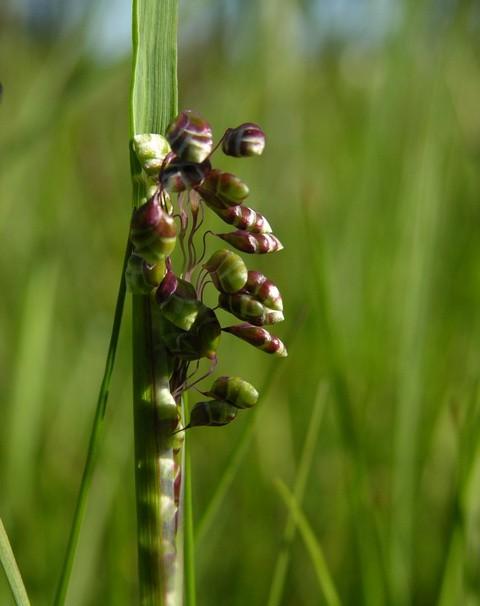
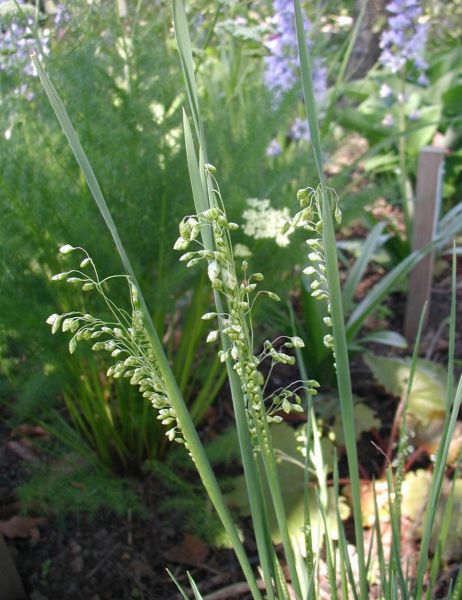
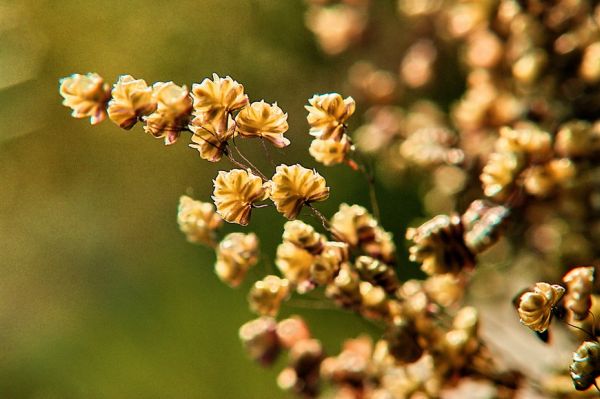
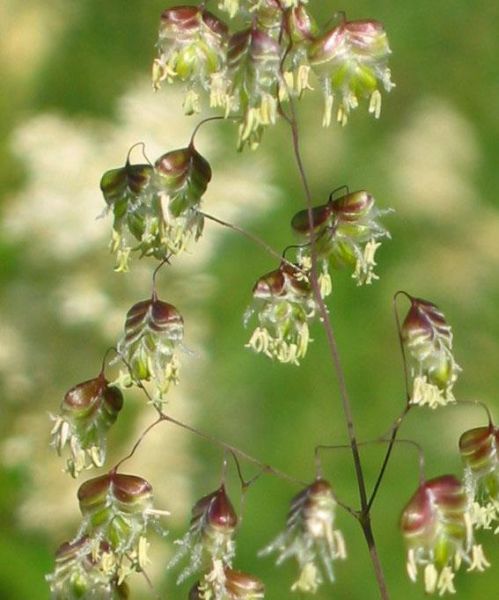
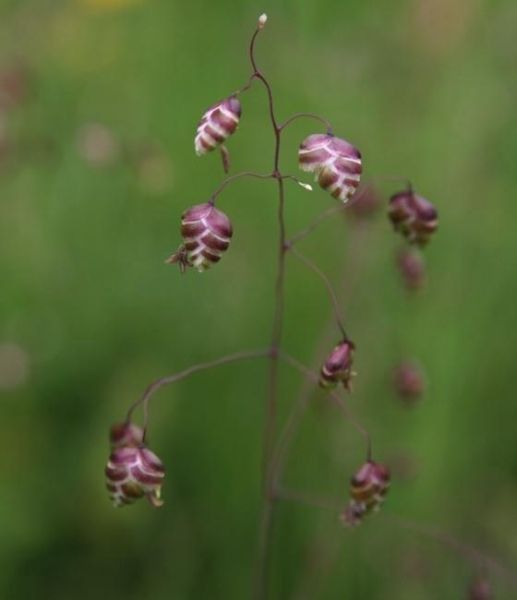
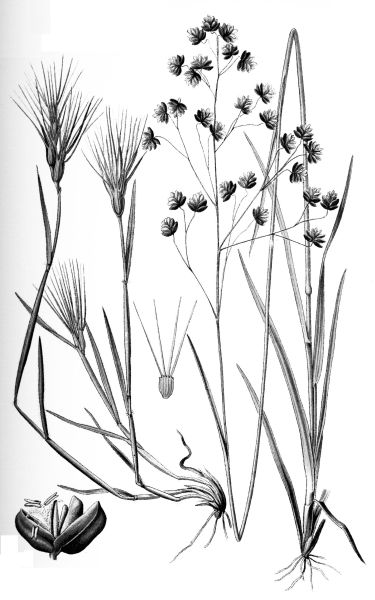
Native to Europe and also found in south-west Asia. It grows on average to 35 cm including the flowers, with upright stems and a loose, bushy habit. The leaves are straight, blue-green and up to 15 cm long, and the delicate heart-shaped spikelets are gathered in loose panicles. The plant owes its name to these delicate panicles, which tremble at the slightest breeze with a rattling sound. Annual species of this grass are greater quaking grass (Briza maxima), which catches the eye with its decorative teardrop-shaped spikelets 3–5 cm long, and lesser quaking grass (Briza minor), which grows only to 25 cm.
This modest grass is suitable for planting on sunny slopes, in rock gardens and in mini heather gardens. It can be planted in groups or among other perennials, and also suits larger containers. The dried panicles are a popular decoration in bouquets.
Requirements
A sunny to partially shaded position and sandy, nutrient-poor soil. Cut the plant back in early spring.
Propagation
By division in late spring or early summer; annual species are sown in spring when the air temperature is about 20°C.